Virtual Artists and Digital Avatars Part 2: The Ethical Dilemma
What roles do digital avatars, virtual artists, and AI-driven personas have in reshaping music and creativity in the entertainment industry?
Skepticism And Ethical Concerns
The adoption of digital avatars in the music space has not been entirely smooth, and not everyone is excited about this “shiny new toy”. This is largely because many concerns and open-ended questions remain, with few clear answers to dispel reservations. Let’s take a look at some of them:
Copyright Infringement and Plagiarism
The way virtual artists are created and trained has raised serious concerns about copyright infringement. AI models learn by processing vast datasets that include human-created works, such as books, research, art, and music. Music generation systems, for example, study thousands of compositions and then generate melodies that match different styles based on that information.
In some cases, even the virtual artists’ physical traits or performance style are drawn from real artists, sometimes without knowledge or consent. This raises the concern of plagiarism. If copyrighted material is used to train an AI, is the music it creates truly original, or just a revised version of its training data? Also, when a virtual artist's attributes, such as voice, are based on a real person, should that person be credited or compensated, and to what extent?
Globally, countries are racing to provide a legal framework that regulates the interactions between humans and Artificial Intelligence. But as these laws are still being tested and refined, we find ourselves in an uncertain space when it comes to addressing these pressing issues.
Redefining Authorship and Ownership
Who owns the rights to the music created by a virtual arist? Who collects the royalties from its distribution?
Using Nigerian Copyright Law 2022 as an example, the author of a musical work is the composer, the person who creates the music (melody, harmony, arrangement). By contrast, the author of a sound recording is the person or entity who made the arrangements necessary for the recording, typically the producer, not necessarily the performer or songwriter.
As for ownership, the Act provides that it typically follows authorship. The author is considered the initial copyright owner, except where the work was created under employment, commissioned works, or explicit assignment.
When applying this logic to a virtual artist, ownership becomes less clear. It could arguably belong to the software company that developed the AI, the creators of the datasets that trained it, or the end-user who generates and edits the content. Since the law currently protects only human-created works, these scenarios raise unanswered questions about authorship, ownership, and royalties.
Applying that logic to a virtual artist, ownership becomes less clear. It could arguably belong to the software company that developed the AI, the creators of the datasets that trained it, or to the end-user who generates and edits the content. Since the law currently protects only human-created works, these scenarios raise unanswered questions about authorship, ownership, and royalties.
The Labor Impact
Virtual artists are predictable, do not age, don’t have scandals, are easy to manage, and won’t argue over ownership of a music catalog. To record labels, they can seem like the perfect employee, a literal cash cow.
This begs the question: if a virtual artist can be "hired" for a fraction of the cost of nurturing a human artist, what will stop stakeholders from massively going this route? There is also the possibility of avoiding labour laws and human rights obligations.
But what happens to the musicians, songwriters, and producers who depend on the industry for their livelihoods? In 2022, there was a controversy surrounding FN Meka, an Augmented Reality artist with millions of followers on TikTok. The controversy erupted after Capitol Records signed FN Meka, with many critics citing the hypocrisy of a virtual artist profiting from the lived and traumatic experiences of real musicians. For many, it was offensive that a major label sought to profit from those experiences without supporting the actual human artists behind them.
Is This Even Art?
Leo Tolstoy said, “Music is the shorthand of emotion.” But what happens when the one speaking is incapable of feeling emotions? Can the work of a virtual artist even be considered art?
As an expression of emotion, thought, experience, and even vulnerability, can a machine incapable of feeling and free thought truly create art, or is it just role-playing at best?
Virtual artists are subject to control and will ultimately portray the thoughts and perspectives of whoever is at the helm, be it an individual or a corporate entity. A virtual artist can be programmed to promote certain ideologies or products, potentially becoming a tool for propaganda or commercialism without the independent thought of a human being.
What Every Creator Needs to Know About Virtual Artists in 2025
Virtual artists are here, thriving, and in 2025, they will add another layer of complexity for artists seeking to succeed. Still, some artists are already finding ways to co-exist with their digital counterparts, choosing not to see them as a competition but as an extension of themselves.
The K-pop girl group Aespa has digital variations of themselves referred to as "æ". The group has successfully created a co-existence between their “real-world” selves and their digital avatars.
For Country singer Randy Travis, the use of voice synthesis technology allowed him to release his 2024 song “Where that came from”. Despite a 2013 stroke that severely limited his ability to sing, this technology provided a way for him to continue making music.
Where some see the death of human creativity, others see endless possibilities. Perhaps, like all new things, the novelty will fade, and a balance supported by laws and established practice will become the norm. For now, even though the legal groundwork for virtual creators remains uncharted, the world of digital avatars is bustling with endless possibilities to explore.
About the author
Keep reading
All posts →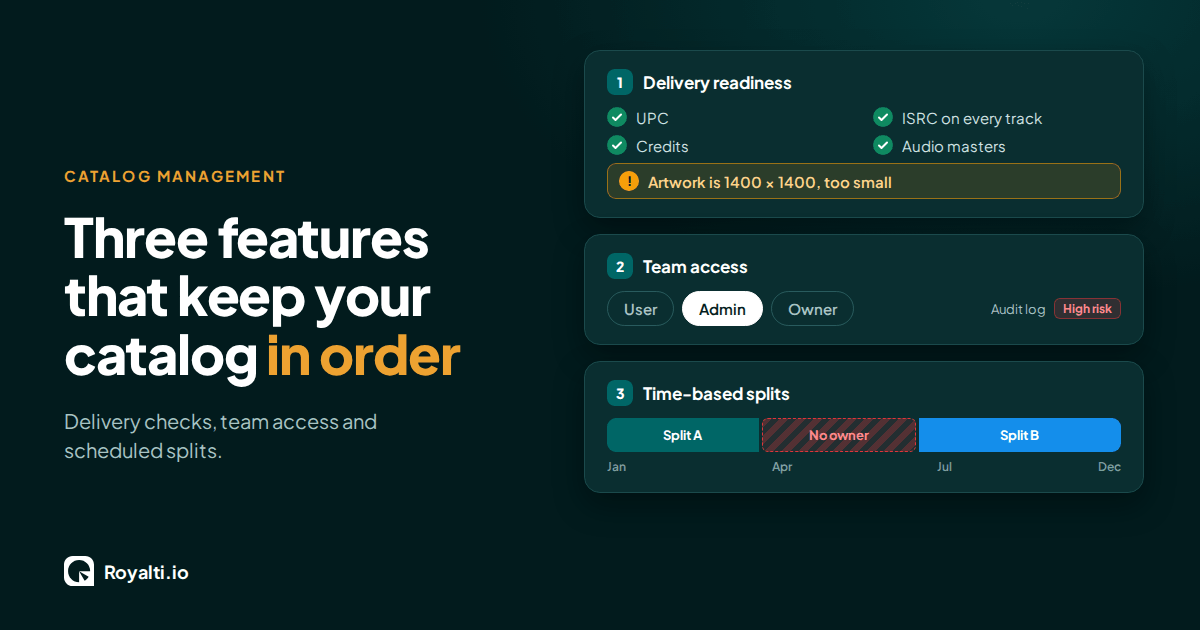
Royalti.io: Three Features That Keep Your Catalog in Order
Delivery checks that stop bad releases, team access you can trust, and splits that change on schedule. Here is how each one works in Royalti.io
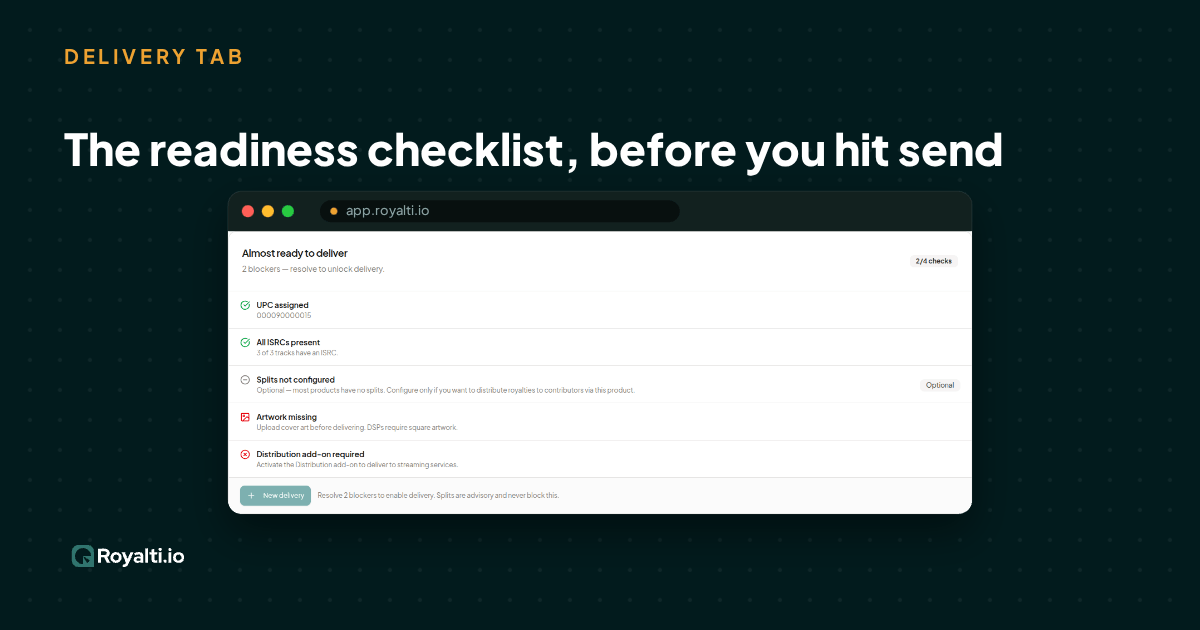
Royalti.io: How We Rebuilt DDEX Delivery
A release can fail on its way to stores without anyone noticing. Here is what broke in our DDEX delivery, how we fixed it, and what you can check first.
AI and Creator Consent 2: Before You Opt In to an AI Music Deal
Your distributor or publisher may already have the right to license your music for AI use. Here is what to ask and what to check for before you say yes.
Comments
No comments yet. Be the first to comment!