Using Royalti.io to Make Year-End Accounting & Royalties Audit-Ready
Royalti.io simplifies year-end accounting for musicians, from metadata organization to royalty tracking, learn how to keep your royalties audit-ready.
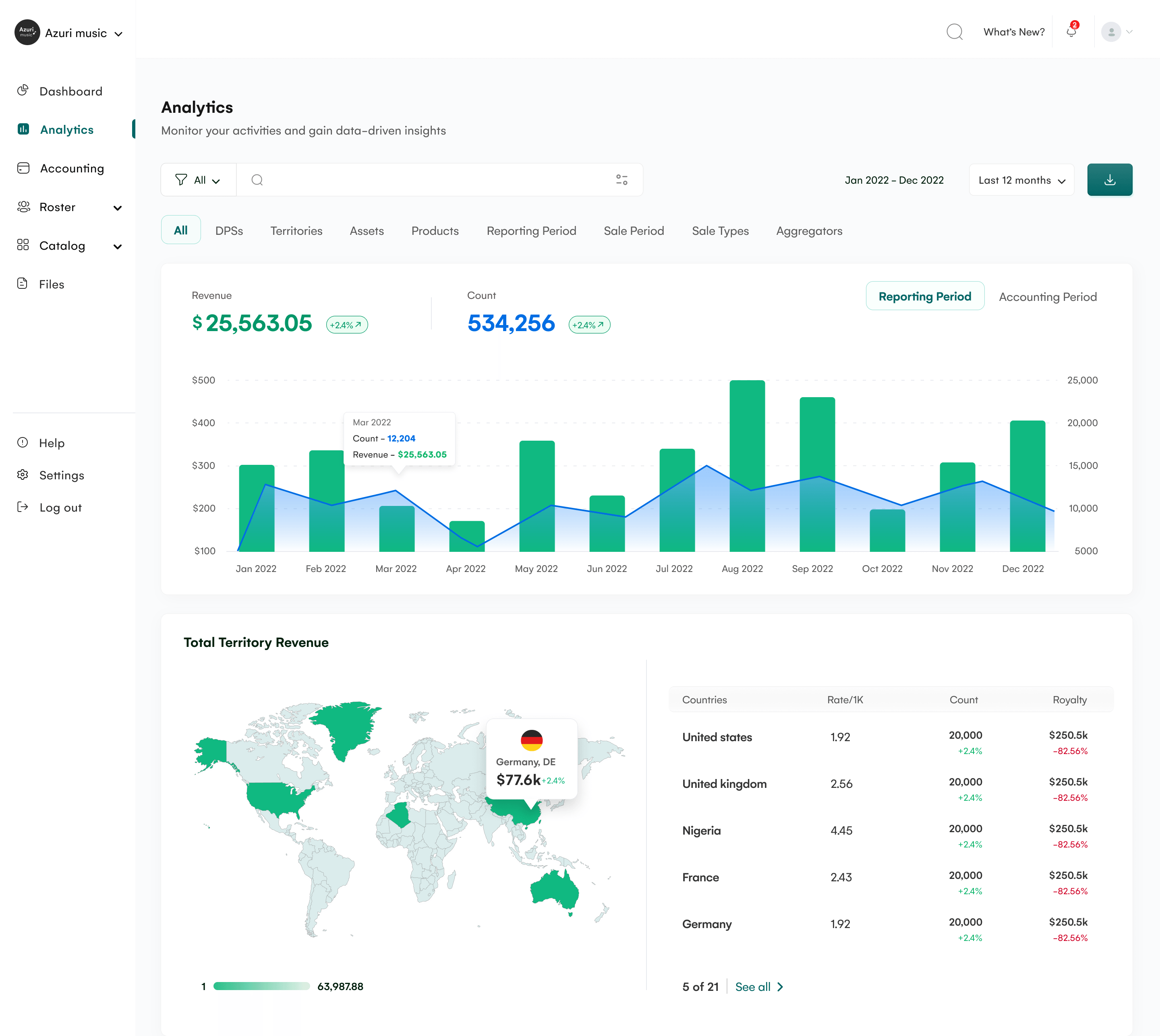
Can you show us the numbers? Sounds like a simple enough question, yet behind it lie unending spreadsheets and financial reports, somehow reduced into digestible formats so that stakeholders can see whether or not profit was made. In Music royalty management, however, answering that question is rarely straightforward, especially when multiple revenue streams come into play. Streaming has completely transformed how music royalties are earned and, in turn, how end-of-year accounting and audit processes function. This brings us to the subject of Audit-readiness.
Why Audit-Readiness Matters for Music Royalties
Audit-readiness, in simple terms, means keeping reconciled financial reports and data prepared for periodic audits. And why does it matter? Because it provides, at first glance, the financial health of a business, representing not just its earnings but also its reputation. Audit-readiness is the equivalent of having all your ducks in a row, minimizing disputes and preventing any incident of missed income.
How Royalti.Io Helps
Royalti.io builds a transparent audit trail, one that traces the music business’s earning history, from metadata to contracts to statements. By automating tedious calculations and showing instant financial breakdowns, the platform secures records and creates a clear chain of evidence that proves income.
The goal goes beyond end-of-year audits. It is about building habits that ease the workflow while maintaining a reliable trail of transactions. With Royalti.io, music professionals spot inconsistencies early and plug potential revenue leaks.
A Checklist To Ready Your Royalti.io Dashboard For Year-End
Organizing Your Catalog & Metadata
First, ensure that every track is complete with accurate ISRCs, song titles, writer and producer splits, and ownership percentages. Even the smallest typo can cause headaches later.
Proper royalty tracking depends heavily on accurate metadata. Royalti.io simplified this by helping you fill in missing data and align it across the catalog, like labeling every shelf in your library so reports remain accurate and organized.
Contract Management
A system that allows you to save specific information from contracts like publishing deals, sync licenses, and distribution agreements in one centralized location. The platform calculates royalties automatically based on contract terms, ensuring transparency in revenue-sharing. Therefore, setting up your workspace in advance prevents last-minute scrambles when payments need verification or audits begin.
Automate Royalty Tracking
The next step after setting up your workspace involves automating the tracking process. Import statements from Spotify, Apple Music, YouTube, and other platforms into Royalti.io. The platform consolidates royalty data from multiple sources into one hub and instantly generates infographic-style breakdowns. This automation cuts down on administrative work and reduces the risk of discrepancies that could make end-of-year audit reports more complex.
Reconcile Streaming Statements
When you upload royalty files from Digital Streaming Platforms (DSPs), Royalti.io automatically processes artists, assets, and products. The system works with any CSV format, cutting out manual entry that often causes errors. Reports can then be exported and compared directly with bank statements, ensuring no revenue slips through the cracks.
These reports help you:
- Identify discrepancies/missed payments.
- Compare income across platforms.
- Review expenses tied to production and marketing.
Track All Income Streams
Royalties don’t stop at streaming. Sync deals, merch sales, and performance income should also be logged, complete with payment amounts, due dates, and contract details. By consolidating all income sources in one place, you create a complete financial picture of your business.
Year-End Checklist
- Confirm all works have complete metadata (titles, ISRCs, splits).
- Tag every contract detail.
- Reconcile DSP statements with bank statements.
- Record non-streaming income (syncs, merch, performance).
- Export summary reports.
Conclusion
In the music business, financial accountability is everything. Every single kobo matters when royalties flow through diverse revenue streams. Old methods of royalty tracking, manual spreadsheets, were time-consuming and prone to errors. Royalti.io's centralized system transforms that process by handling these calculations automatically.
By turning complex financial tasks into simple yet actionable steps, Royalti.io makes year-end accounting less of a burden and more of a streamlined process. So why not build a well-configured workspace today and always have an accurate record of your royalties?
About the author
Keep reading
All posts →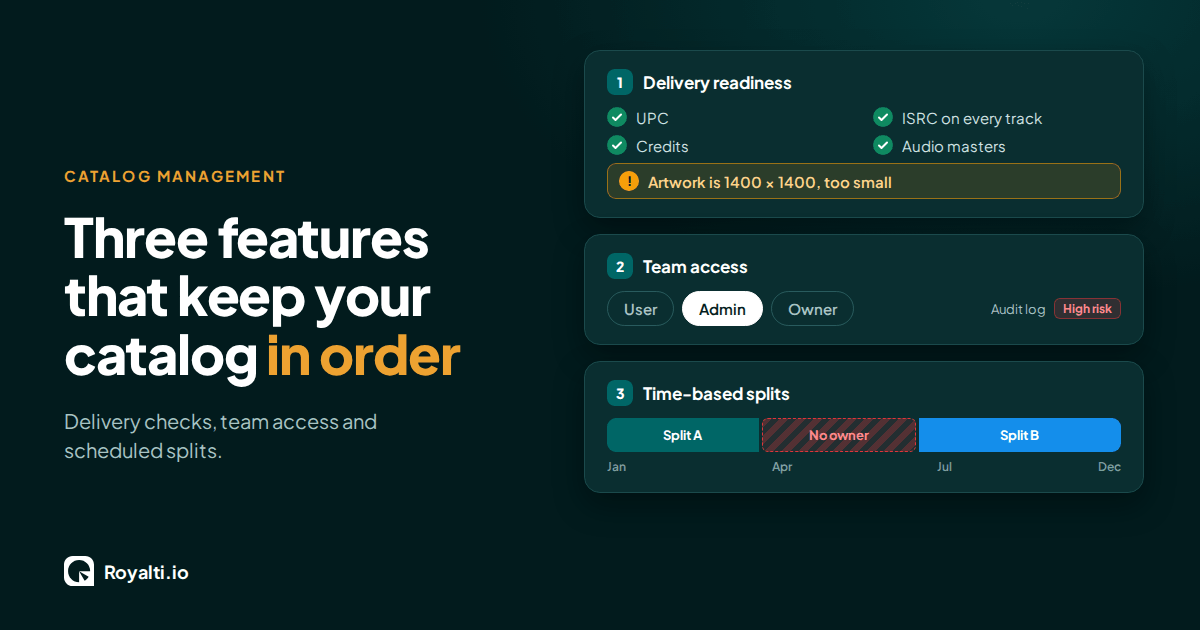
Royalti.io: Three Features That Keep Your Catalog in Order
Delivery checks that stop bad releases, team access you can trust, and splits that change on schedule. Here is how each one works in Royalti.io
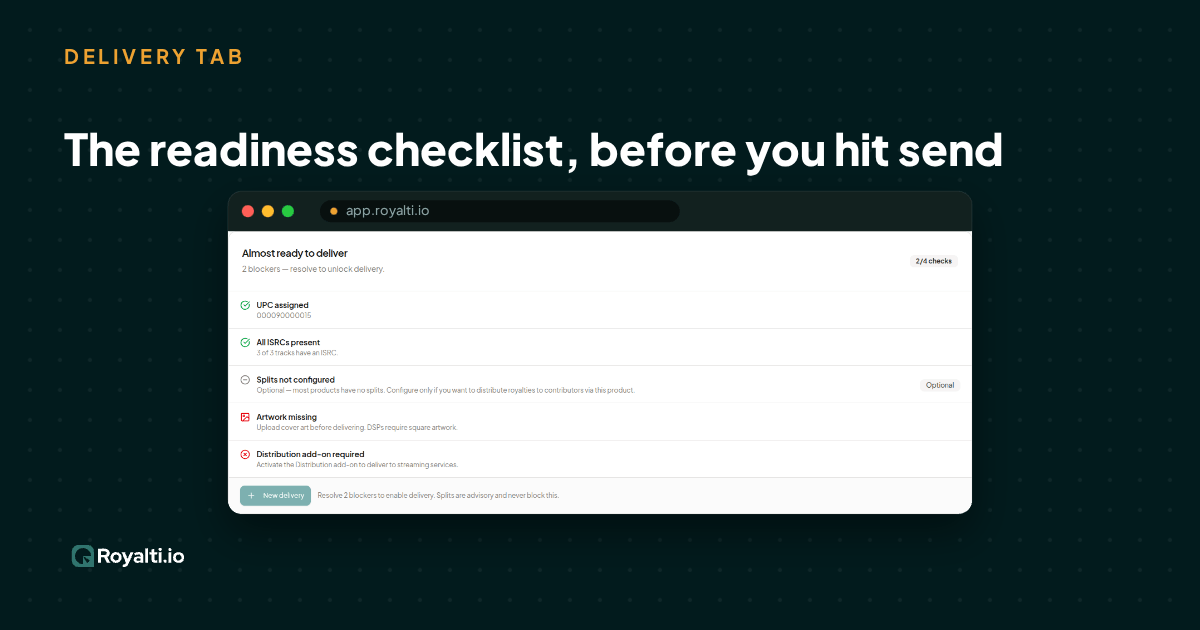
Royalti.io: How We Rebuilt DDEX Delivery
A release can fail on its way to stores without anyone noticing. Here is what broke in our DDEX delivery, how we fixed it, and what you can check first.
AI and Creator Consent 1: What Creator Groups Want From AI Music Deals
Learn why creator groups are demanding consent, fair compensation and transparency from AI music deals
Comments
No comments yet. Be the first to comment!