What Happens to Royalties When an Artist Dies? Royalties, Copyright, and Succession
What happens to music royalties when an artist dies? Who inherits royalties, and what can artists do now to protect their legacy

Have you ever wondered what happens to an artist’s royalties when they are no longer here? Death sometimes comes at the end of a long, fulfilled life, and sometimes it doesn’t. It is unpredictable, and when it arrives unannounced, we have seen the most disheartening legal battles follow. And this is why we need to continue having conversations about copyright succession and inheritance as it concerns music royalties under Nigerian law. Today‘s topic is a little sober, but before we begin, please note that this post is intended solely to inform and should not be considered legal advice. Please consult a lawyer.
Intellectual Property
If you read our posts regularly, you already know that music is a form of intellectual property. Specifically, the copyright in the master recording and the musical composition is treated as property. And because these works are products of creative effort reduced to a medium of expression, the law recognises them as intellectual property. Like any other form of property, it can be owned, sold, and licensed, and most importantly for our discussion, it can be transferred by assignment, inheritance, or operation of law.
Copyright is property recognised and protected by law. It does not simply vanish when its owner dies. So what actually happens to music royalties when an artist passes?
The Masters and the Composition
Music typically involves two distinct copyrights: one in the sound recording (typically the recorded performance) and the other in the composition (the melody and lyrics). While the sound recording copyright often belongs to the artist, if they own their masters, it can also be owned by the record label or a third party. The composition copyright, on the other hand, typically belongs to the songwriter/the artist or their publisher.
There is no set rule here, and real-world ownership depends on a case-by-case basis. However, for purposes of this post, we will assume the artist owns both the composition and the masters.
Revenue generated from both is commonly referred to as royalties, but after the death of the owner, each is subject to a different lifespan.
How Long Does Copyright Last After Death?
The duration of copyright, as set out in Section 19 of the Nigerian Copyright Act 2022, is as follows: for musical compositions, protection lasts for the author’s lifetime plus 70 years after the end of the year in which the author dies. For sound recordings, protection lasts 50 years after the end of the year in which the recording was first made available to the public.
If an artist both wrote their songs and owns their masters, their estate inherits two revenue streams, and the composition copyright could outlive the sound recording copyright by decades.
Example:
An artist who records and releases a song in 2024 and dies in 2030, assuming they owned the masters, leaves behind a composition copyright protected until 2100, but a sound recording copyright that expires in 2074.
Who Inherits the Royalties?
Section 30(1) of the Act provides that copyright is deemed to be movable property, capable of being transferred by testamentary disposition. The Act further clarifies that upon the death of the author, copyright is transmissible through a valid will or by operation of law, meaning that where there is no will, the applicable law determines who inherits ownership. The Act also acknowledges co-ownership, where persons share a joint interest in the whole or any part of a copyright.
Dividing copyright ownership among multiple heirs and ensuring each has a claim to future royalties can be complex, but it is achievable. If the goal is to prevent disputes, deadlock, and uncollected income, the key is to lay the groundwork earlier and eliminate ambiguity.
What Can You Do Right Now
The law provides a framework, but that framework works best when your affairs are already in order.
- Get a lawyer.
- Write a will and specifically address your music copyrights and royalty streams within it.
- Name a trusted administrator who understands the music industry
- Register your works with a Collection Management Organisation (CMO), and if you expect international royalties, register with equivalent organisations abroad, or at the very least with distributors who have affiliations with those organisations.
- Ensure your metadata is accurate, from songwriter credits and ISRC codes to IPI numbers.
- Document your catalog with a clear record of every song you have written or recorded, including splits, producer agreements, and other contracts.
What This Means for Royalty Payments
For royalty streams handled through distributors, such as streaming DSPs, the estate must formally notify the distributor of the artist’s death and provide documentation proving their right to collect that income. Once this is done, subsequent royalties are paid to the estate, which can then distribute them among beneficiaries. Most distributors have specific processes for this situation, and moving quickly is far easier when clear instructions are already in place.
In Nigeria, royalties from public performances, including radio airplay, TV broadcasts, and public venues, are collected by CMOs. It should be noted that, at the time of writing, there is some turbulence surrounding the two major CMOs operating in Nigeria: that is, COSON (Copyright Society of Nigeria) and MCSN (Musical Copyright Society of Nigeria), with ongoing litigations on both sides. Nonetheless, the standard practice remains that CMOs only pay registered members. Therefore, the artist must have registered their work with the relevant organisation. In the event of a death, the estate may present probate or letters of administration and, where necessary, re-register works under the estate’s name. A valid will and thorough documentation make this process significantly easier.
This process applies to publishers as well. The goal is to establish a structure that can manage your catalog seamlessly even after you are gone, ensuring royalties are collected and distributed correctly.
Legacies are Meant to Endure
Knowing what an artist is entitled to is one thing; ensuring that entitlement is collected is another. While there may still be room for improvement in Nigeria’s legislative provisions around copyright protection, there is already meaningful protection available under the Nigerian Copyright Act 2022, and it is worth taking advantage of.
Remember: even after death, an artist’s estate can object to and decide what happens to the subject of the copyright. This includes the right to claim authorship of their work and the right to object to any distortion, mutilation or modification that would harm their honour or reputation. Even when they are no longer here, artists can still protect their legacy and the integrity of their life’s work.
About the author
Keep reading
All posts →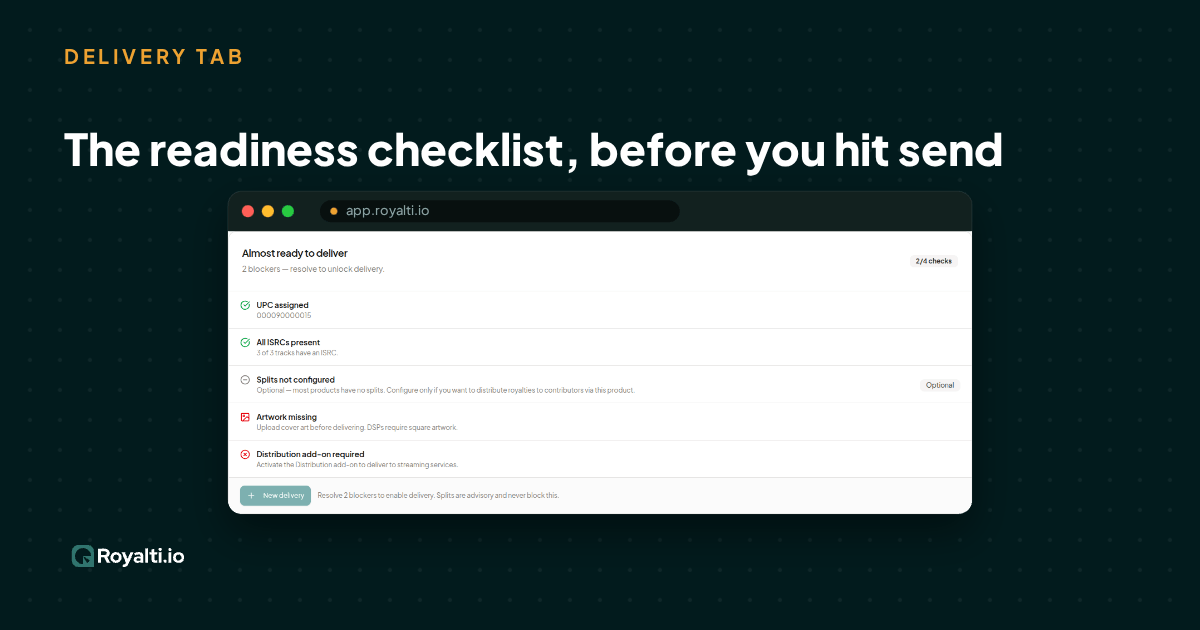
Royalti.io: How We Rebuilt DDEX Delivery
A release can fail on its way to stores without anyone noticing. Here is what broke in our DDEX delivery, how we fixed it, and what you can check first.
AI and Creator Consent 1: What Creator Groups Want From AI Music Deals
Learn why creator groups are demanding consent, fair compensation and transparency from AI music deals
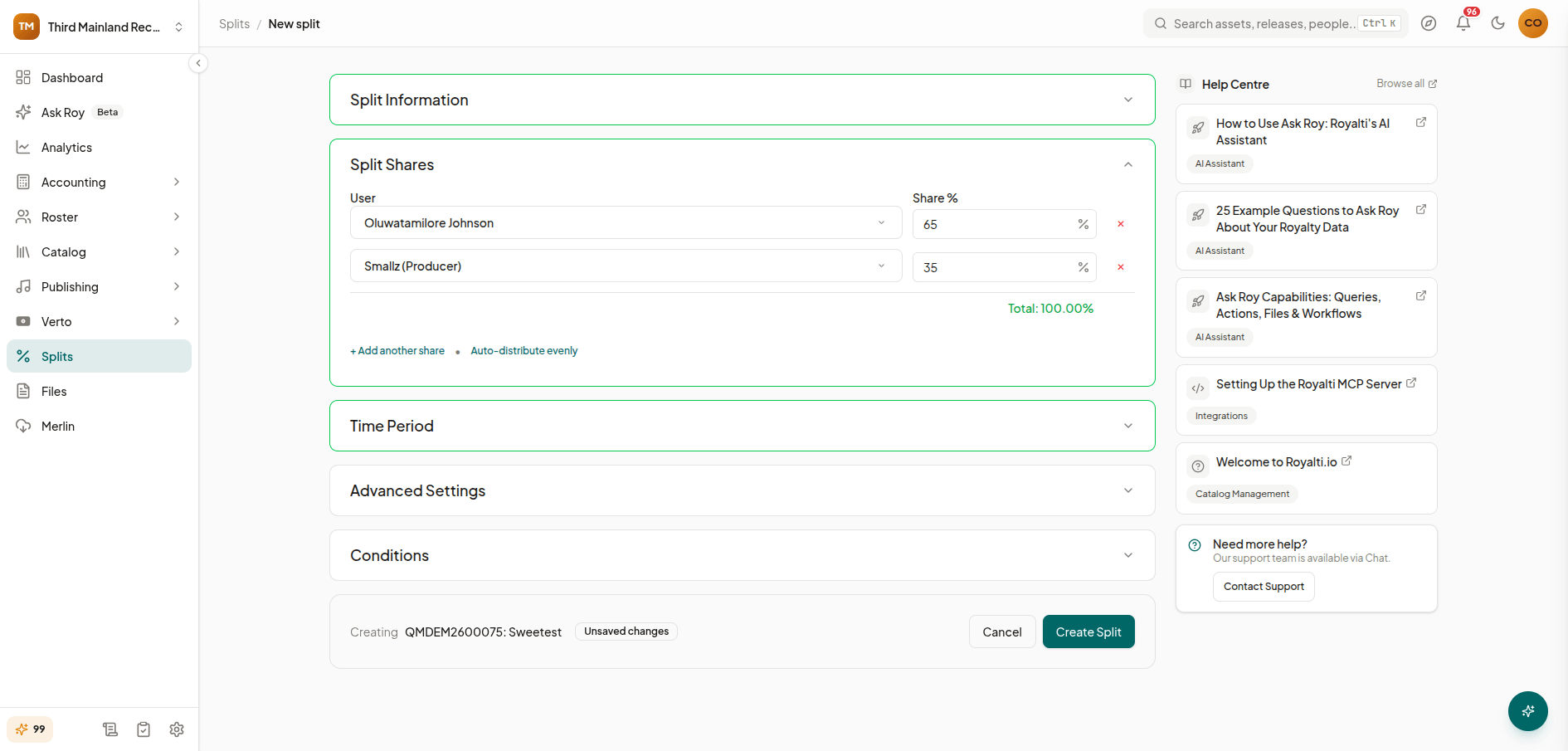
Time-Based Splits: How to Schedule Ownership Changes on Royalti.io
When a split change depends on someone remembering to make it, it gets missed. Royalti.io's time-based splits let contract terms live inside the system that pays out against them
Comments
No comments yet. Be the first to comment!