What Does Recoupment Actually Mean and What Every Artist Beeds to Know
An artist can be commercially successful and still owe their label money. We broke down how recoupment works and what to look out for.

We talked about the intricate nature of a 360 deal, and the economics of it, how it developed from a simple need of record labels to sustain their profit model. Today, we talk about something most music professionals have heard at one point or another in their careers: recoupment. And how does that one word result in a debt that some artists do not even know they have?
It is Not a Gift, Not Dash Money; It is an Investment
So you get signed by a label. They give you money to record, shoot videos, run marketing campaigns, and even add extra in there for your living expenses, all while the album is still in progress, running on estimates and projections that it will be a success.
Fast forward to when the album drops and money starts rolling in: streams, merch, tours, endorsements. And then you realize that the numbers are not what you expected them to be. They are less, a lot less. The label says: " You are still unrecouped. What does that even mean?
The Advance
When a record label offers you an advance, it is intended to be exactly that, an advance. A payment drawn against your future royalties, because in the world of business, money is never simply given; it is earned. The label is essentially saying: “We trust that your talent and potential are worth this sum.” It is not a signing bonus. The label is lending you money and expecting to recover it from the income your music generates. And make no mistake: that sum will be recouped specifically from your share of that income.
The Lifestyle Illusion
Now this is where it starts getting tricky. A young artist who has spent years hoping for a break, whose potential has now been validated with a significant sum of money, is almost certain to experience a lifestyle change. Sometimes it is not just about the money, the cars, the apartments, the clothes. All of that comes at a cost.
And then there are the additional expenses that are also classified as recoupable: recording costs, video production costs, marketing and promotional spend, and tour support. Whether you are aware of it at the time or not, each of these was a loan drawn from future long-term royalty payouts.
A Bet on Future Success
The reality is that while a record label is a creative partner, it is also a business, and we can liken its operations to those of a venture capital firm. A company that puts money into businesses it believes will become significantly more valuable, expecting a larger return if they do. It is that simple.
A record label’s advance to an artist is much like that. When it spends millions on recording music, shooting videos, and skill development, it does so believing that the artist’s music will generate far more than it has spent. Both the VC and the label are providing money upfront and by doing so, placing a calculated bet on future success.
The Recoupment
Recoupment can determine how, when, and whether an artist ever gets paid. It is the process a record label uses to recover the money it has invested in an artist. And here is the part that consistently catches artists off guard: recoupment does not come out of the total revenue a song generates. It comes out of your royalty share alone, and deductions continue until the outstanding recoupable balance is fully cleared.
So let's say you signed a 60/40 royalty deal (the label takes 60% of revenue and you take 40%), your music generates ₦500 million in total revenue, and you have received a ₦50 million advance. At the point of recoupment, the label does not look at gross revenue. Your debt can only be settled from your 40%. In this scenario, your 40% accumulates to ₦200 million, but ₦50 million of that goes toward clearing the advance first, leaving you with ₦150 million. Meanwhile, the label has collected its ₦300 million in full.
These terms are documented, sitting quietly in fine print. Depending on the royalty rate negotiated and the size of the advance, an artist can be commercially successful by every visible measure and still be unrecouped.
Cross-Collateralisation
What happens when the advance cannot be fully recouped from a single album? That is where cross-collateralisation comes in. In a multi-album deal, it allows a label to offset an unrecouped balance from one project against the royalties generated by another. One album can pay off the debt of the one before it. The balance simply moves from project to project until it is cleared or the contract ends.
Before You Sign
Recoupment is not in itself unfair. From everything we have discussed so far, a few facts remain. A label is a business, one that spends significantly in building an artist’s career. That expenditure carries real financial risk, and the recoupment mechanism is how that risk is shared. The issue is not recoupment as a concept. The issue is signing without fully understanding what is in your specific contract.
You have a responsibility to yourself to carefully evaluate and negotiate two very important things in the midst of everything else in a record deal. The first is what is recoupable, so you know just what you will be asked to pay back, and that no cost can be added retroactively. The second is the royalty share rate, so that you retain enough of your earnings to clear the advance in a reasonable time.
Before signing, you must have clear answers to the following: the total recoupable amount and what costs comprise it, at what royalty rate will recoupment occur, and whether cross-collateralisation applies across multiple projects. None of these should ever be left to be assumed.
Note: This article is for informational purposes only and does not constitute legal advice.
Keep reading
All posts →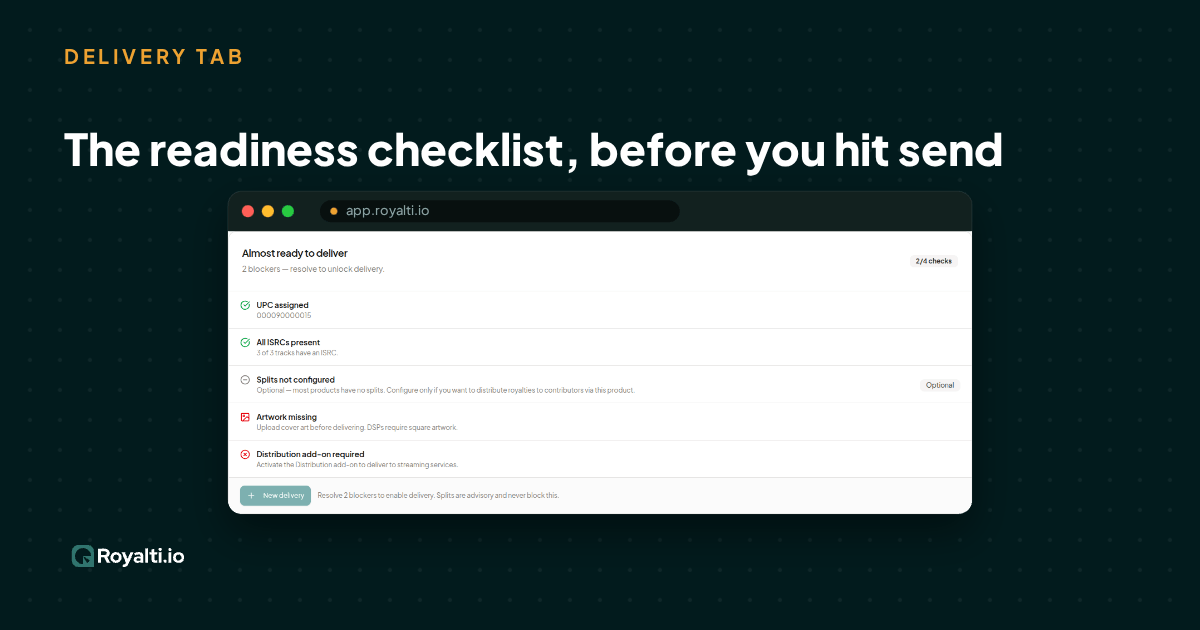
Royalti.io: How We Rebuilt DDEX Delivery
A release can fail on its way to stores without anyone noticing. Here is what broke in our DDEX delivery, how we fixed it, and what you can check first.
AI and Creator Consent 1: What Creator Groups Want From AI Music Deals
Learn why creator groups are demanding consent, fair compensation and transparency from AI music deals
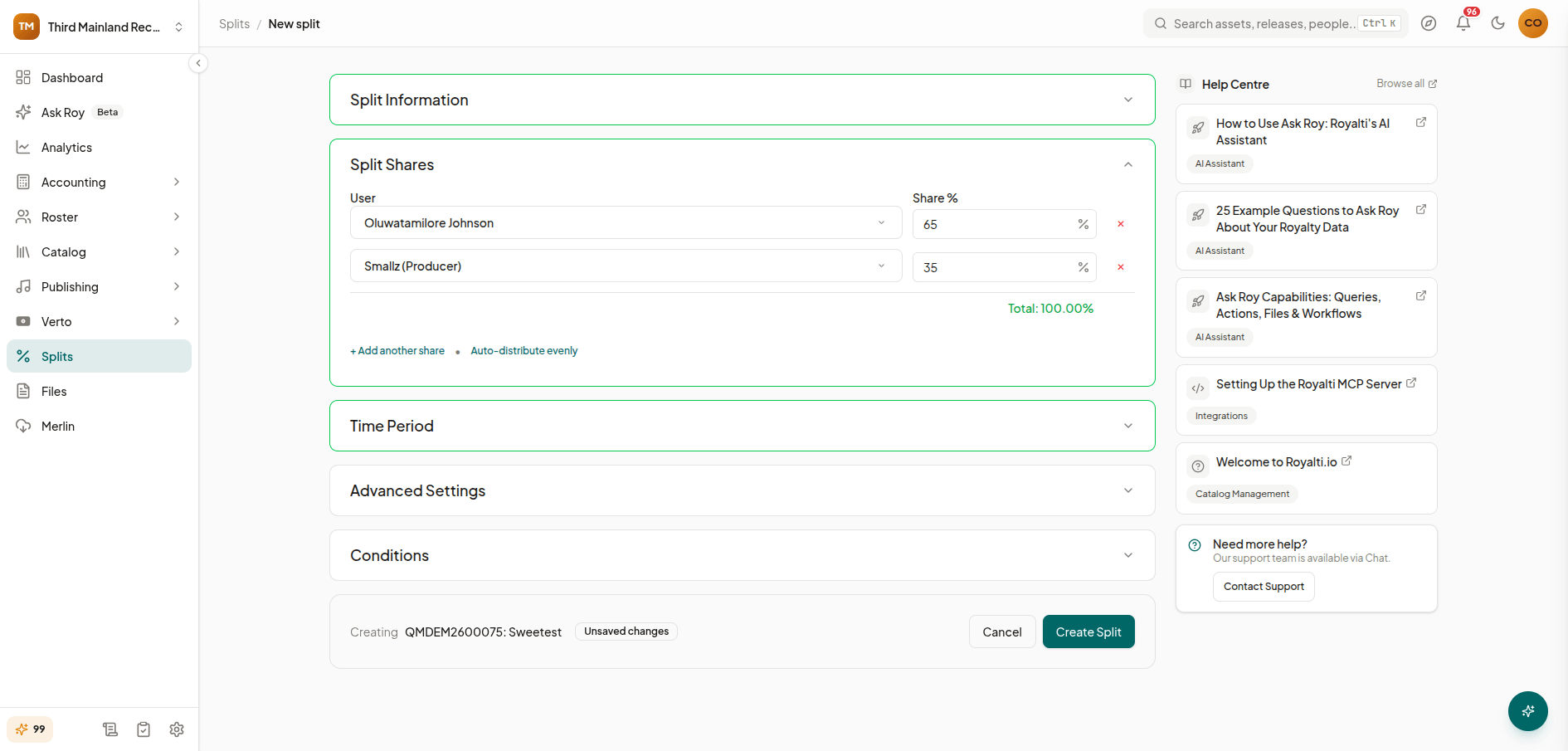
Time-Based Splits: How to Schedule Ownership Changes on Royalti.io
When a split change depends on someone remembering to make it, it gets missed. Royalti.io's time-based splits let contract terms live inside the system that pays out against them
Comments
No comments yet. Be the first to comment!