The African Women Who Changed Pop Music Forever
The African women who redefined pop music through innovation, cultural fusion, and groundbreaking artistry.
It would be unfair to say that African women haven’t held their own in pop music long before the world started paying attention. Long before the very famous names that come to mind when you mention Afro-pop or pop fusion, some women charted that course, making way for those coming behind them to break limits and set new records.
Far from a passing trend, their work produced quantifiable commercial benchmarks and institutional validation, all by fusing pop with centuries of African music traditions, a recipe that has proved itself a success.
The Architecture of A Global Sound
When you think about pop, you think upbeat, fun, playful, and catchy. Its structure is usually simple, with repetitive choruses and themes like love, loss, and everyday human experiences. Pop is also very forgiving of experimentation and genre fusion; over the years, we have seen countless derivations and hybrids: K-pop, C-pop, Afro-pop, and more. Some argue that pop is commercially driven, and for every generation, it often finds itself morphing with the times and trends. However, pop music is a mirror of popular culture, a reflection of whatever values sit at the crest of society at any given moment.
Today, we are witnessing something remarkable: for once in a very long time, the influences shaping pop’s direction are decentralized and no longer anchored solely to Western trends.
The Groundwork of Globalism
Ask Justin Bieber, Taylor Swift, or Ariana Grande, and they will tell you that pop music can change your life. Since it is ever-evolving, it makes sense for it to be the perfect playground for artists who want to stay connected to the pulse of things.
One thing pop music will do is get the attention of a younger demographic. And the African women we speak of today understood that to communicate effectively, they had to know their audience and speak in a language that they understand. Their rise in global pop was not by accident, nor did it happen overnight. It is the result of decades of pioneering work spanning generations, a deliberate effort to position cultural authenticity as global currency.
A Legacy Built On Dedication And Hard Work
Zenzile Miriam Makeba, Angélique Kidjo, Evi-Edna Ogholi, piece by piece, they built a legacy that was never hidden or timid, but bold, unapologetic, and brilliant. They used music as a window into history, a time capsule for culture held dear, and a vehicle for political advocacy. The message was clear: true recognition comes not from conformity but from authenticity and holding firm to cultural identity.
Over time, newer artists were thankfully paying attention. Asa explored social dynamics with striking precision while keeping her style fresh and unmistakably her own. Omawumi and Waje, blending R&B, soul, and folk influences, demonstrated it was okay to experiment until you discovered a sound that felt uniquely yours.
What these women did was make room, clearing a path for the next generation to confidently merge their regional sounds with global contemporary music.
Redefining Global Pop
So they stepped in and unapologetically occupied space, emboldened by the courage of those who came before them. After all, you can’t be asking for permission if the goal is to dominate.
Tems: Temilade Openiyi
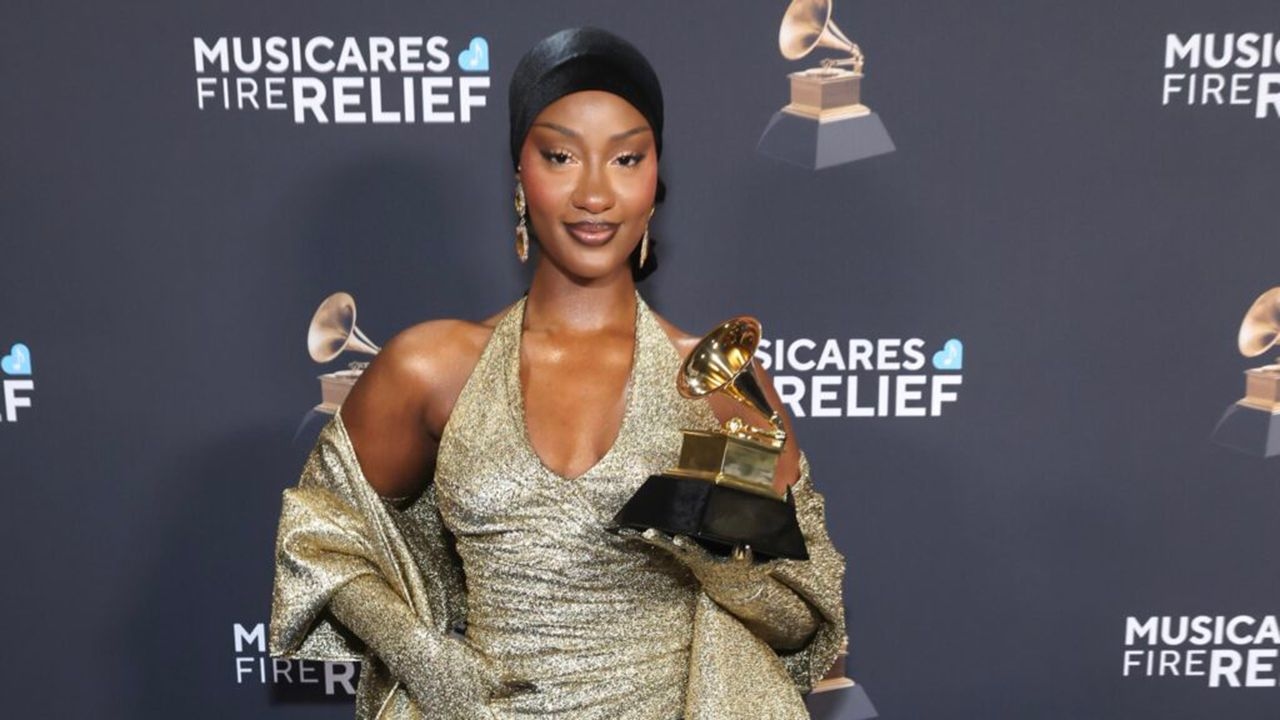
Her feature on Future and Drake’s Wait For U debuted at number one on the US Billboard Hot 100 and earned her the first Grammy Award for a Nigerian female artist. She also co-wrote the Oscar-nominated Lift Me Up for the Black Panther: Wakanda Forever soundtrack. Her second Grammy came in 2025 for Best African Music Performance for Love Me JeJe, making her the Nigerian artist with the most Grammy wins. In 2024, she was honored with the Breakthrough Award by Billboard Women in Music.
Tyla: Tyla Laura Seethal
The only way to describe what Tyla did is simple: a masterclass in commercial disruption.
Her 2023 single Water entered the Top Ten in both the UK and the US. In the US, it peaked at number seven, making her the highest-charting African female solo artist in the chart's history, surpassing a record held by Miriam Makeba since 1968.
How did she do it? She pioneered her own genre fusion, that's how. A blend of global pop and Amapiano, infused with elements of R&B and Afrobeats, and named it "Popiano.
And for her efforts, she won the Grammy Award for Best African Music Performance in 2024 and received the Billboard Global Force Award.
Ayra Starr: Oyinkansola Sarah Aderibigbe
With Arya Starr, the numbers speak for themselves. Spotify named her the biggest female Afrobeats artist in a recent 12-month period, and her songs have accumulated over 3 billion total streams on the platform. Arya broke a 16-year record at the 2025 MOBO Awards, becoming the first woman to win Best African Music Act and the first African female artist to win Best International Act.
Quietly Moving The Chess Pieces: Female Executives and A&R
The commercial success of these women reflects a change in industry organizational structures, one that has expanded opportunities for women to challenge long-standing boundaries. This shift includes a rise in female-led operational infrastructure across the industry.
A network of female executives behind the scenes, operating as strategists, promoters, and senior decision-makers.
And as these women ensure that every part of the system aligns with global expectations, the artists are empowered to deliver culturally rich content.
Self-expression, economic independence, a tool for social transformation; for African women, music has always been more than just rhythm and beats. With digital platforms and innovations, that flame is stoked with unhindered access to globalisation and the freedom to shape their careers and narratives.
About the author
Keep reading
All posts →
Royalti.io: Three Features That Keep Your Catalog in Order
Delivery checks that stop bad releases, team access you can trust, and splits that change on schedule. Here is how each one works in Royalti.io

Royalti.io: How We Rebuilt DDEX Delivery
A release can fail on its way to stores without anyone noticing. Here is what broke in our DDEX delivery, how we fixed it, and what you can check first.
AI and Creator Consent 1: What Creator Groups Want From AI Music Deals
Learn why creator groups are demanding consent, fair compensation and transparency from AI music deals
Comments
No comments yet. Be the first to comment!