What Spotify’s Imminent U.S Price Hike Means for Royalty Statements
This breakdown explains what Spotify’s upcoming U.S. Premium price increase may mean for your royalty statements and global streaming income.

Remember when we talked about the stark reality of streaming income in a previous post? We highlighted how most Nigerian artists make far less per stream than their Western counterparts, largely because subscription fees are lower in many African markets and the value of the naira continues to undermine payouts. Ultimately, the moral of the story is that what listeners pay every month on these platforms determines the value placed on music, at least as far as streaming is concerned.
Now, Spotify is reportedly planning to raise its Premium subscription prices again in the U.S. in the first quarter of 2026, and we will be discussing what that could mean for creators’ future royalty statements.
The Premuimization Effect
Depending on who you ask, this development is either another example of how “capitalism ruins everything” or a positive sign for music royalty growth. While price hikes are hardly welcomed by consumers, it is understandable that music publishers, independent labels, and songwriters see them as a strong indicator that the value of music streaming is finally rising.
The last time Spotify increased its U.S. premium fees was in June 2024, and despite the public complaints on social media, the platform did not report any significant user churn. Thus, Spotify may feel confident enough to repeat the move in 2026.
How does a Price Hike Affect Royalty Payouts?
So let’s talk about Spotify’s payment Model. It operates a pro-rata (streamshare) model. Which, in simple terms, means that each month Spotify takes its cut of all subscription and advertising revenue, whatever is left is pooled together. This is then distributed to rights holders based on their share of total streams for that period.
Updates to Spotify’s royalty system also introduced a minimum threshold: only tracks with a minimum of 1,000 streams within a 12-month window are eligible for recorded royalties. Content that falls below this threshold has its revenue redistributed to eligible tracks.
Now, I am no mathematician, but it seems commonsensical that a price increase would likely expand the size of the royalty pool. And if the total number of streams doesn’t rise at the same pace as revenue, the value of each stream may increase. While this isn’t guaranteed, since many factors influence the pool, higher subscription revenue generally improves the earning potential for rights holders.
This means, all this being equal, the value of a single stream in the U.S. is expected to increase proportionally.
Why This Matters To Nigerian Artists
Some may ask, why should a US-only price change concern Nigerian artists? The answer is quite simple and lies in Spotify’s royalty structure.
It is no longer news that royalty payouts vary based on where a listener is located and how much they are paying. Streams from countries with higher subscription fees generate more revenue than streams from lower-paying regions.
For Nigerian artists still trying to break into markets like the U.S. or Europe, a price hike could mean slightly higher payouts per qualifying stream. For those already enjoying significant international listenership, the effect may be noticeable on their royalty statements come 2026.
What It Means for Spotify
As stated earlier in this post, Spotify did slightly test the waters in June of 2024, and it did not cause a major loss in subscribers. This may have encouraged the company to try again. If the 2026 hike succeeds, it would mean that Spotify has managed to sustain its profitability.
It also means that Spotify can, in theory, deliver higher revenue to rights holders and position itself as a pacesetter in improving the per-stream value within the current streaming model, setting it apart from its competitors like Apple Music.
Conclusion
An increase in subscription price has the potential to raise the baseline, per-stream value of your music, increasing the worth of music catalogues and improving long-term returns for rights holders. For artists with audiences in high-value markets, royalty statements from Q1 2026 may reflect the benefits of this decision.
But remember, learning about music royalties alone is not enough. Understanding how they’re earned, diversified, or impacted by global policies matters only when you have the right tools to manage them efficiently.
That’s why Royalti.io exists: to simplify royalty data, offer transparency, and strengthen trust among rights holders.
About the author
Keep reading
All posts →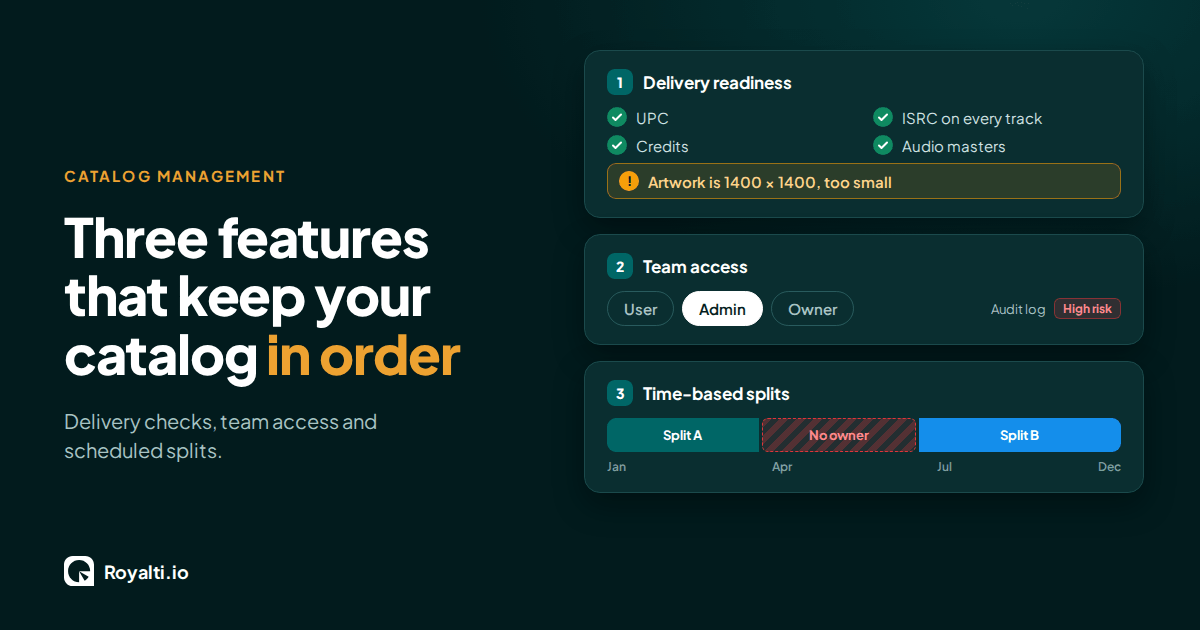
Royalti.io: Three Features That Keep Your Catalog in Order
Delivery checks that stop bad releases, team access you can trust, and splits that change on schedule. Here is how each one works in Royalti.io
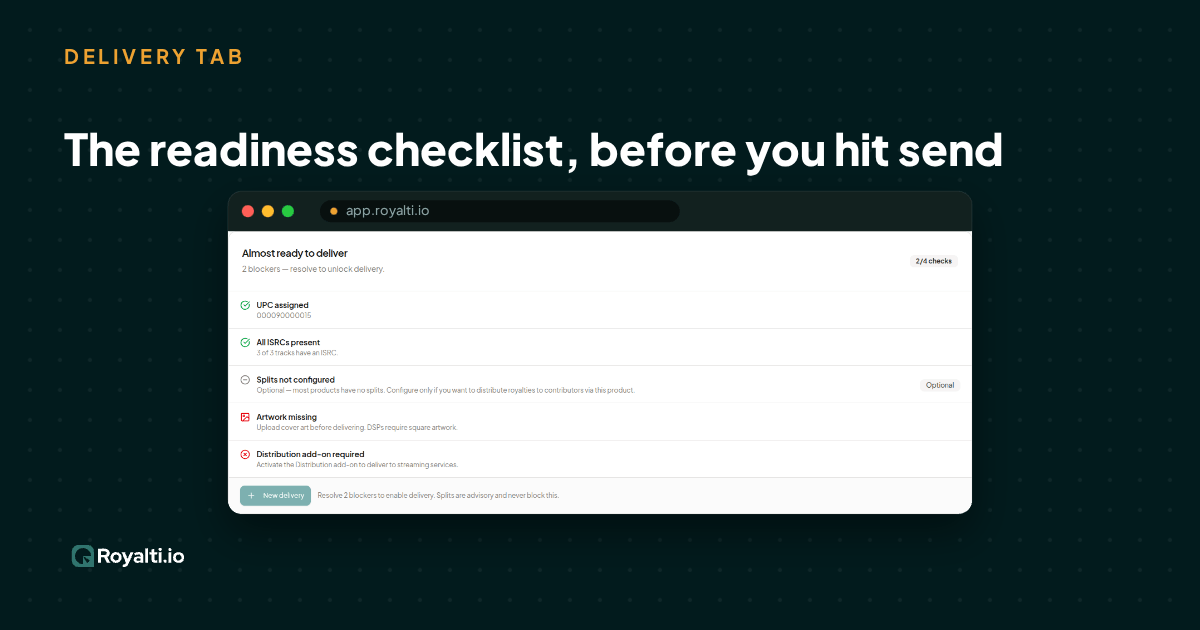
Royalti.io: How We Rebuilt DDEX Delivery
A release can fail on its way to stores without anyone noticing. Here is what broke in our DDEX delivery, how we fixed it, and what you can check first.
AI and Creator Consent 1: What Creator Groups Want From AI Music Deals
Learn why creator groups are demanding consent, fair compensation and transparency from AI music deals
Comments
No comments yet. Be the first to comment!