How Endorsement and Merchandise Income Actually Works
All you need to know about endorsements, merchandise deals, and brand ownership. How trademarks can influence who profits from an artist's success

In a market where a single stream generates considerably less revenue than in many other territories, it is little wonder that endorsement deals are considered far more than supplementary income. That reality explains why brands continue to invest heavily in musicians and why endorsement opportunities have become an important part of the music industry.
What is an Endorsement Deal?
An endorsement allows a brand to pay an artist to associate their name, image, and influence with a product or service. It is a deal built on the understanding that the artist has earned enough trust with their audience to create commercial value that a brand can leverage. In exchange for an endorsement fee, the brand gains access to that audience and the right to use the artist’s identity to help sell its products or services.
An endorsement deal can be structured as a flat fee arrangement for a specified period with agreed deliverables like media appearances, T.V commercials, and even social media posts. Or it can be structured as a profit-sharing arrangement that allows the artist to receive a percentage of sales that is generated through the partnership.
Whatever the underlying structure, an endorsement deal should be a collaboration between one party with a product or service that needs an audience and another with an image capable of generating just the right amount of buzz.
Endorsements have long since moved beyond being merely a supplementary income stream in the Nigerian music industry. How do you maintain that view in light of deals like Wizkid’s extensive collaborations with Pepsi spanning years and estimated to be over $1.8 million, Rema’s creative partnership with Puma in 2021, Burna-Boy with IWC Schaffhausen, or Tiwa Savage’s association with Roc Nation? Different deals spanning different commercial objectives, but one thing is clear: an artist’s brand is a valuable asset that goes beyond music sales alone. Given that streaming payouts remain considerably lower than in many other markets, endorsement deals will likely remain a significant source of income for Nigerian artists.
What You Are Actually Selling
What an artist ultimately earns from an endorsement deal depends on the arrangements they have already agreed to.
If an artist is signed to a 360 deal, for instance, the label may be entitled to a percentage of future endorsement income, but for independent artists with no such agreement, endorsement revenue goes directly to the artist, subject to deductions like a management commission, production expenses, etc.
The same principle applies to merchandise revenue. But before discussing how merchandise income is earned, it is important to discuss rights ownership.
Merchandizing
Realistically, a single merchandise item (t-shirt, hoodie, or limited edition collectible) can potentially generate more revenue than 11,000 Spotify streams under typical Nigerian streaming economics. Think about that for a second.
It means that an average small to mid-sized artist could earn more from merchandise sales at a single show than from an entire year of streaming royalties. But there is a catch: how much an artist can make from merchandise depends largely on who owns the artist’s brand and rights.
Ownership Is Everything
On the one hand, you have artist-owned merchandise, where the artist retains ownership of all rights and creative direction, selling merch directly at shows, through their own online store, or via a fulfillment partner.
On the other hand, a Label-controlled merchandise, where, depending on the recording agreement, the label may be entitled to a share of merchandise sales or may even own the rights entirely. In this situation, the label is very involved in the production, marketing, and distribution of this merchandise. Any advances paid against future merchandise income are often treated as recoupable expenses.
There is, however, a third arrangement involving a third-party merchandise company. Here, the artist licenses their image, name, and trademark to the company, which in turn handles production, distribution, and sales independently. In many respects, this allows the artist and the label to generate income without having to take on the burden of running an elaborate operation.
The Importance of Brand Ownership
The viability of both endorsement and merchandise deals depends on: first, the existence of a recognisable brand to speak of, and secondly, the ownership of that brand.
A stage name, logo, slogan, or visual identity that has not been properly protected may leave room for third parties to benefit from it without the artist’s or label’s consent. What brands, sponsors, and merchandise partners are often paying for is exclusivity, an access that their competitors do not have.
That exclusivity becomes far more valuable when it is supported by clear ownership and trademark protection. The ability to negotiate endorsement deals and monetise merchandise rests on the ability to prove that the underlying rights belong to you. And that is the importance of brand ownership, the difference between fully benefiting from the audience an artist has built or watching that value flow elsewhere.
Note: This article is for informational purposes only and does not constitute legal or financial advice.
About the author
Keep reading
All posts →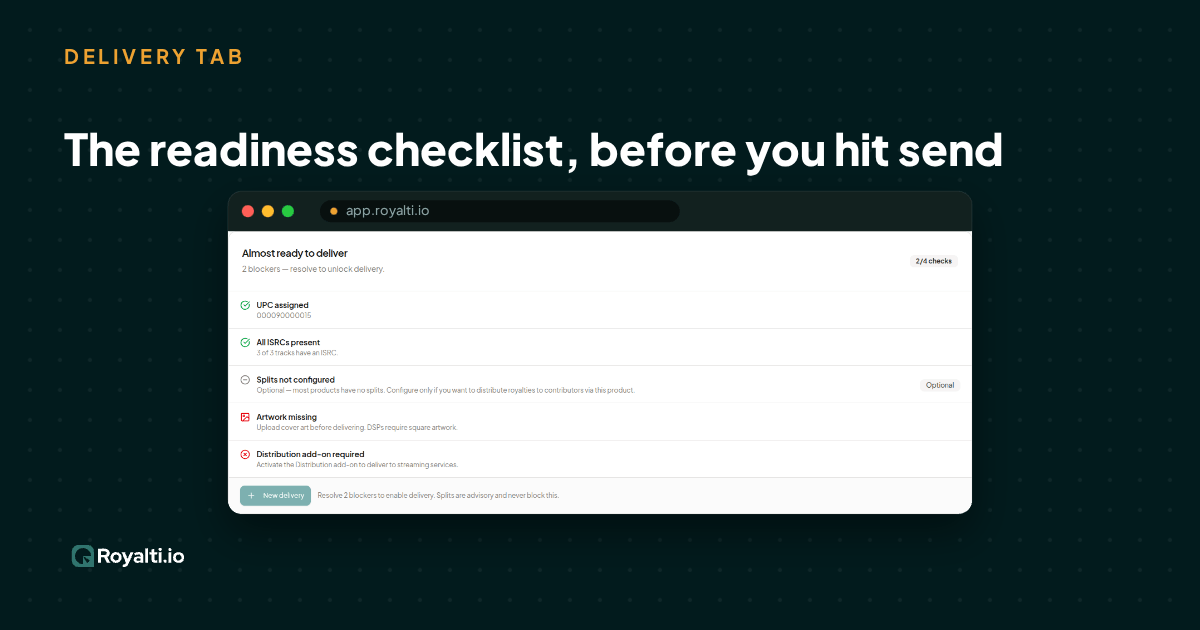
Royalti.io: How We Rebuilt DDEX Delivery
A release can fail on its way to stores without anyone noticing. Here is what broke in our DDEX delivery, how we fixed it, and what you can check first.
AI and Creator Consent 1: What Creator Groups Want From AI Music Deals
Learn why creator groups are demanding consent, fair compensation and transparency from AI music deals
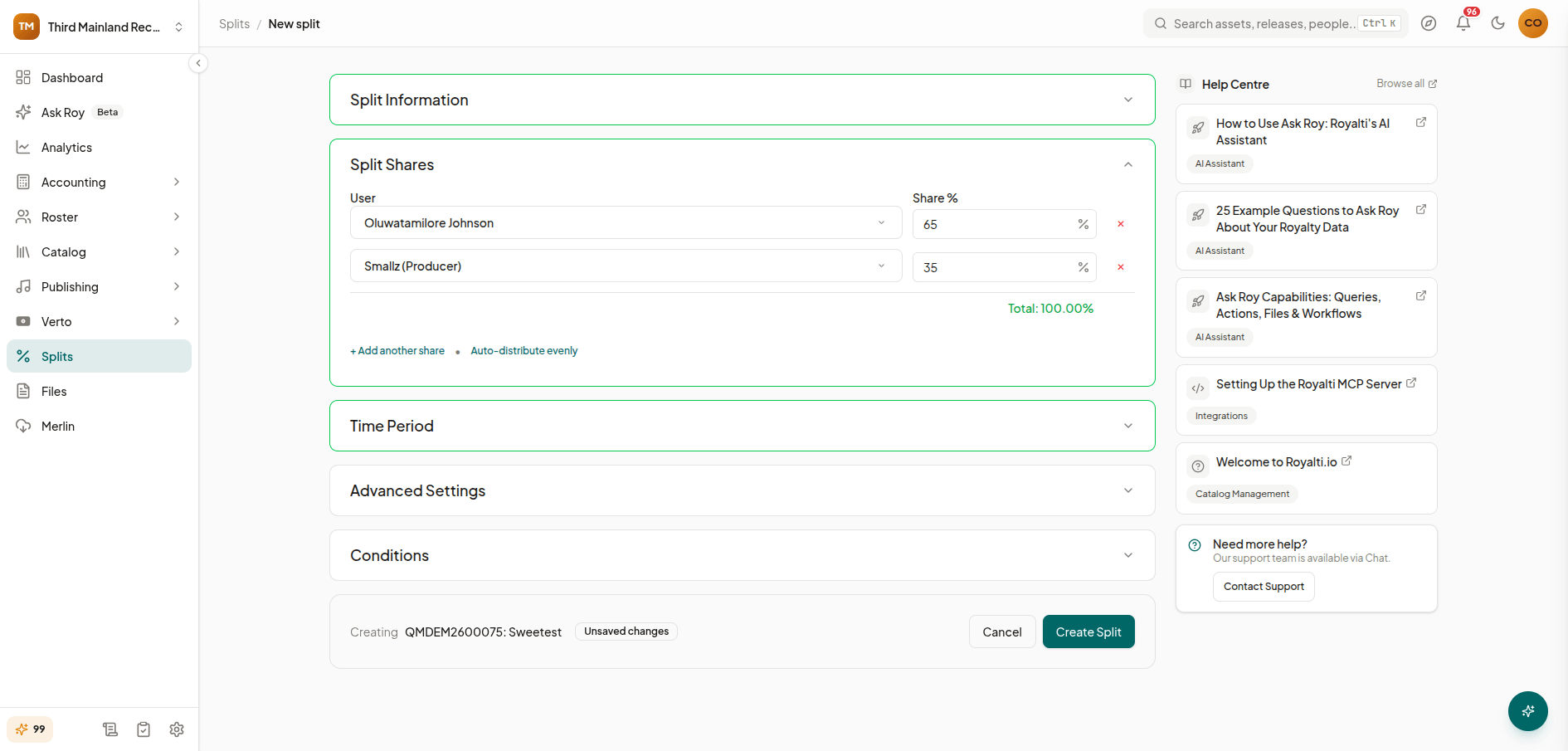
Time-Based Splits: How to Schedule Ownership Changes on Royalti.io
When a split change depends on someone remembering to make it, it gets missed. Royalti.io's time-based splits let contract terms live inside the system that pays out against them
Comments
No comments yet. Be the first to comment!