From Score to Screen 1: How Does Film Music Royalties Work
From original scores to song placements, film music is more complex than it looks. Here's what you need to know about how the money flows.

For Nigerian producers and artists, how music gets into film and how the money flows back out is one of the least understood parts of the entertainment industry. Sync licensing in film might just be the most under-explored and yet most lucrative revenue stream in music today; allow me to explain.
From Score to Screen: How Film Music Royalties Work
On the 15th of March 2026, the 98th Academy Awards, also known as the Oscars, were held in Los Angeles. It was a night of glamour and accomplishment for film, but notably for music as well. It saw the Swedish composer Ludwig Göransson win his third Oscar for Best Original Score, one man, three films: Sinners, Oppenheimer, and Black Panther.
A nerd’s delight to mention that the movie Sinners was released with two separate albums: an Original Score and an Original Soundtrack. What that reflects is two entirely different categories of music, two different sets of contributors, and two different royalty structures.
Score, Soundtrack, and Song: They Are Not the Same Thing
These are three different types of music you can find in a film or TV production, and for each of them, the royalty implications are different.
The Original Score
This is music composed specifically for the film, that subtle orchestral or instrumental underscoring that runs beneath the scenes and dialogue. Ludwig’s Oscar was won for his work in creating one of these for Sinners. Scores are typically commissioned under a work-for-hire agreement, meaning the film studio or production company owns the master recording. However, in some cases, the composer retains the copyright in the composition, which means they earn performance royalties every time the film is screened or broadcast.
The Soundtrack
This is a collection of songs created for the film, either newly recorded or commissioned specifically for that production. Think the string arrangements of contemporary pop songs in the Bridgerton series or the sweeping assembly of African artists on Black Panther: Wakanda Forever.
While Ludwig composed the score for Sinners, its soundtrack featured Rod Wave, Brittany Howard, Rhiannon Giddens, and others. Each of those appearances required a separate licensing agreement covering both the composition and the recording.
The Song Placement
These are pre-existing, already released songs licensed for use in a specific scene. A good example is the Fast and the Furious franchise; its street racing and party sequences were built around a curated mix of hip-hop, electronic, and Latin tracks, all pre-existing licensed songs, alongside original soundtracks. Song placement straight-forward, requiring the permission of both the composition copyright owner and the master recording owner.
The Sync Licence
The synchronisation (sync) licence is the agreement that makes all of this possible. It grants permission for a song to be incorporated into a film, television show, or advertisement. Under the Nigerian Copyright Act of 2022, sync licensing is not a specifically defined concept. What the Act permits is the exclusive rights of the copyright owner, which include the right to “make an audiovisual work in respect of the work” for compositions and to “reproduce the work” for the master recording. A sync licence is simply written permission to exercise those rights, and section 30 of the Act requires that permission to be in writing.
Now Let’s Talk Money
For each of these types of music, the crux is always the terms negotiated by the parties involved, from the one who composes the score to the one who produces the soundtrack to the artist who performs it. There is an option to take an upfront fee, negotiate back-end royalties, or structure a combination of both. The same applies to sync licensing: the fee is negotiated between the rights holder and the licensee, and varies based on the nature of the project, the prominence of the placement, and the leverage of the parties involved.
Beyond the sync fee, there are performance royalties that flow every time the film is screened in a cinema, broadcast on TV, or streamed on a platform. Whether the rights holder taps into that flow or settles for a one-off lump sum is entirely up to them.
The Backend
When little Jason Weaver was asked to be the singing voice for young Simba in Disney's The Lion King (1994), he probably didn’t know what back-end royalties meant. But his mother made a decision to opt for a lower upfront fee while negotiating a percentage of the lifetime royalties from the film and soundtrack. She took a risk, and more than three decades later, her son still receives payment for that performance.
The upfront fee is appealing for obvious reasons. It is certain, a lump sum. But the back-end is usually where the long-term value sits, quietly accumulating, from the composer of an original score that could earn performance royalties every time the film is broadcast, to the songwriter whose pre-existing song is synced, earning performance royalties with every broadcast and the master owner earning neighbouring rights royalties through sound recording. In most cases, these streams simply flow to the production company that paid off the rights holders upfront, money that could have been theirs.
For song placements in particular, the sync licence should not just be about the upfront payment. A single well-placed song can become a reliable, recurring revenue stream because every subsequent airing or streaming of that content generates performance royalties, potentially for decades.
Which brings us to a question worth sitting with before Part 2: a Nigerian artist, with international CMO affiliations and a publishing administrator managing international collection, whose song is placed in a Netflix series watched across 50 countries. Performance royalties flowing from each of those territories and routed through bilateral agreements between CMOs. That picture is not just reserved for international artists. So why are so few Nigerian artists in it? We will explore the answer in part 2.
About the author
Keep reading
All posts →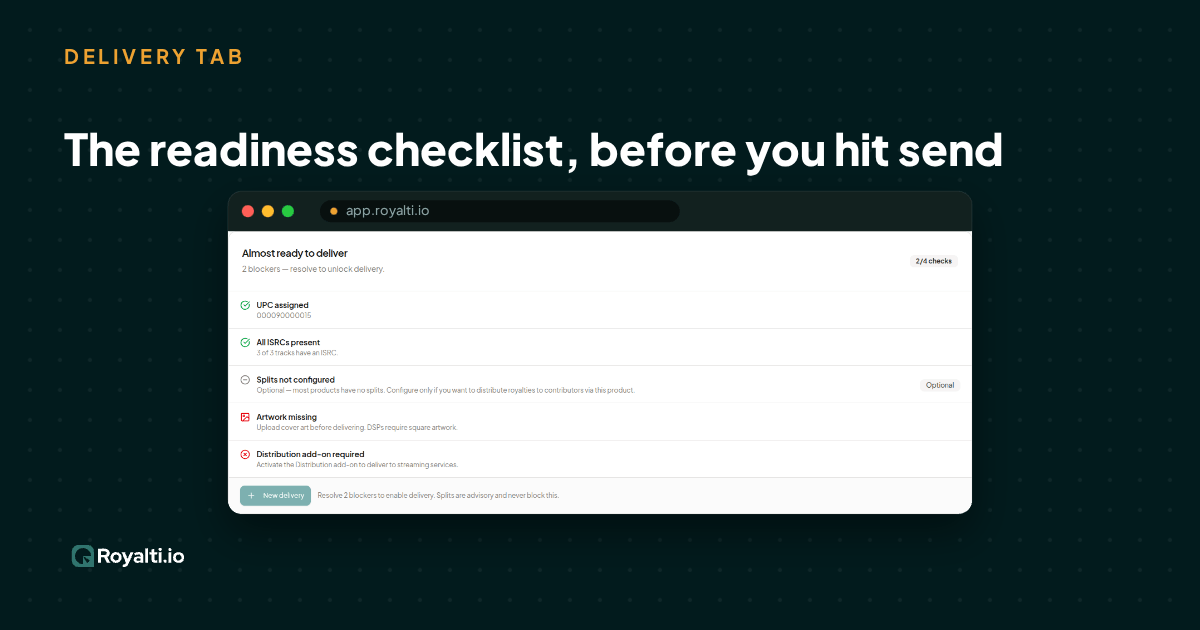
Royalti.io: How We Rebuilt DDEX Delivery
A release can fail on its way to stores without anyone noticing. Here is what broke in our DDEX delivery, how we fixed it, and what you can check first.
AI and Creator Consent 1: What Creator Groups Want From AI Music Deals
Learn why creator groups are demanding consent, fair compensation and transparency from AI music deals
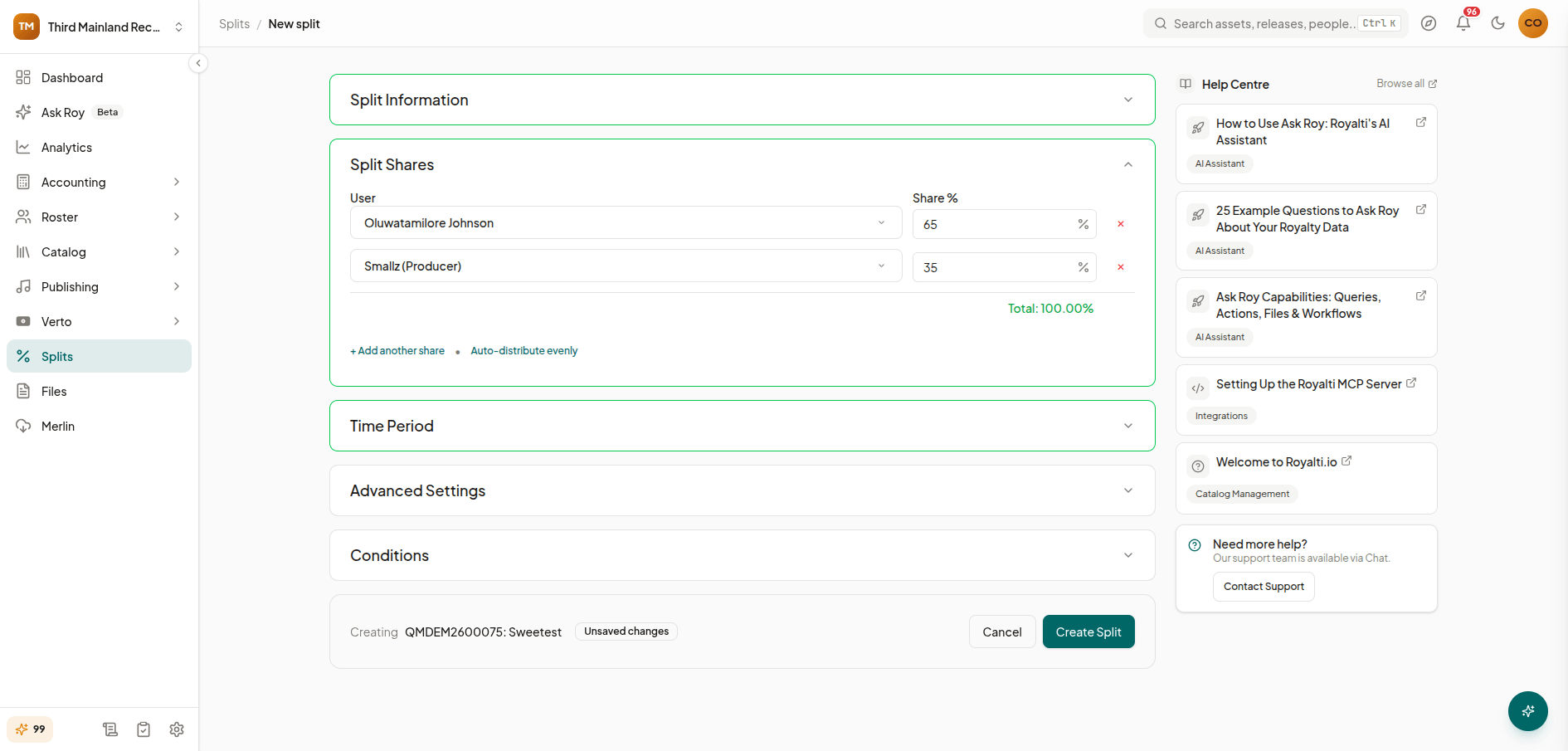
Time-Based Splits: How to Schedule Ownership Changes on Royalti.io
When a split change depends on someone remembering to make it, it gets missed. Royalti.io's time-based splits let contract terms live inside the system that pays out against them
Comments
No comments yet. Be the first to comment!