Beats, Rights, and Royalties: What Every Nigerian Producer Needs to Know
Many Nigerian music producers are building their careers on handshake deals and one-off fees, often at the expense of long-term income. This guide breaks down producer agreements and what your contracts should really include to protect your earnings.

He said, “Anyone that does not have what I am charging, I am not working with them.” A bold declaration, but that is Sarz’s stance, and he did not stutter. In February 2026, the Nigerian producer sat down on the Afropolitan Podcast and shed light on some of the most important aspects of music production and the industry, distribution, royalty sharing, splits, and the economic infrastructure needed to protect Nigerian musicians. To hear this from a producer of his experience was insightful, and it is what prompted today’s post to discuss producer agreements. How are they structured, and depending on what they contain, what is a producer actually entitled to?
Two Copyrights In Music
Well, let’s start with copyright, the legal protection of intellectual property. In music, copyright exists in two forms: the sound recording and the composition. The sound recording covers the recorded performance, while the composition covers the melody and lyrics. Depending on the circumstance, a producer could hold an ownership stake in both.
Copyright follows ownership. Except where that ownership has been assigned, licensed, or otherwise legally transferred, the income from the use and exploitation of music should naturally flow to whoever holds the copyright.
A producer who only receives a flat fee for their studio work has no ongoing financial relationship with the song. Their services are considered paid for in full, and that's it. A producer who negotiates backend royalties on the master, or secures a co-writing credit on the composition, stands a much better chance of earning income from that song for as long as it generates revenue.
The Money
Typically, there are three ways a producer can get paid.
1. The Flat Fee
A one-off payment that often carries the tacit understanding that the producer is being paid to produce a beat or record a session, and that the financial relationship ends there. It is a work-for-hire arrangement, with the understanding (express or implied) that the producer’s skills are being engaged for a fee, and that all the work derived from that engagement belongs entirely to whoever is paying for it.
This arrangement is quite common in the Nigerian music industry. To accept a flat fee is to waive all rights to any subsequent income from that work. There are no backend royalties and no streaming income. Once the song is released, the producer receives nothing further.
2. The Beat Lease vs. Exclusive Beat Sale
Another common arrangement involves selling or leasing beats to artists. These days, this transaction is considerably easier with the internet. However, there is an important distinction that needs to be made, and that is whether the agreement executed is a non-exclusive lease or an outright sale.
The first scenario grants the recipient a licence to use the beat for a defined purpose over a set period of time, while the producer retains the right to license that same beat to other parties. The second scenario involves the transfer of ownership exclusively to a single party, restricting use entirely to the buyer and excluding everyone else.
There have been cases of producers selling a beat “exclusively” to more than one party, which have led to copyright disputes. In both scenarios, it is important that the terms of the agreement are documented in writing rather than left to verbal understanding.
3. Backend Royalties and Publishing Splits
Here, the producer may waive the up-front fee entirely or accept a reduced one in exchange for a percentage of royalties once the music is released. Generally, the lower the upfront fee, the higher the backend should be; the final terms depend on the ability of the producer to negotiate what they are worth. A producer who receives a substantial upfront fee may reasonably accept a smaller backend percentage and vice versa.
This arrangement can apply not only to the recording but also to the composition. Nigerian producers who contribute to melody or lyrics should always consider negotiating a publishing stake.
A work-for-hire deal simplifies the relationship and sets expectations even before the work begins. Leasing or selling your beats is straightforward enough, but the legal parameters must be clearly stated. Negotiating backend royalties is ideal, but enforcement and rates matter just as much as the negotiation itself. Not one of these methods is wrong, and the other right; what matters most is that the choice is made knowingly, with terms clearly defined.
It's all in the Contract
Under the Nigerian Copyright Act 2022, copyright in a sound recording lasts up to 50 years, while copyright in a composition endures for 70 years after the songwriter's death. But all that means very little to a producer who did not properly negotiate the terms of their agreement. Every contract is different and depends on specific factors: the nature of the work, the dynamics of the relationship, the parties involved, and the applicable laws.
There are basic questions that every contract you enter into needs to answer: what am I getting out of this arrangement, and how do I receive it? Whether you are signing a production service agreement, a producer agreement or a licence agreement, the most important thing is that the terms are explicitly stated and not open to misinterpretation.
A properly drafted contract should include:
- The exact fee: amount, currency, and payment timeline.
- The specific percentage for backend royalties, where applicable, including the method to be used for calculation and from what point they commence.
- Songwriting credits and publishing split where the producer contributed to the melody or lyrics, with the exact publishing percentage.
- How the producer is credited on all streaming platforms, physical releases, and promotional materials.
- What happens if the recording is released without the agreed credits or payment
- Whether the producer is entitled to income generated from broadcast, film, advertising, or other licensing placements.
- Any other terms specific to the situation.
The split sheet is another document every producer should have in place and have recourse to years down the line. The split sheet is signed by all contributors to a song, it records each contributor’s name and contact information, their CMO affiliation (COSON, MCSN, or international equivalents), their specific role or contribution, their ownership percentage and the date the agreement was made.
The Harmony of Beats and Pens
The conversation around music royalties in the Nigerian music industry is layered and tied to a wide range of factors, from persistent gaps in streaming revenue to infrastructural lapses that make it difficult for producers to realise the full economic value of their work. Lower per-stream payouts for domestically generated streams affect the economics of the industry at every level, including what a producer can reasonably demand upfront or at the backend.
For many producers, the financial returns have simply not matched the creative input invested. Most of these shortfalls trace back to an information and documentation gap. The solution is better contracts and due diligence in signing them. It does not matter whether these deals are made internationally or right here in Nigeria; producers who build the very sound that we all love and enjoy need to stop leaving money on the table.
About the author
Keep reading
All posts →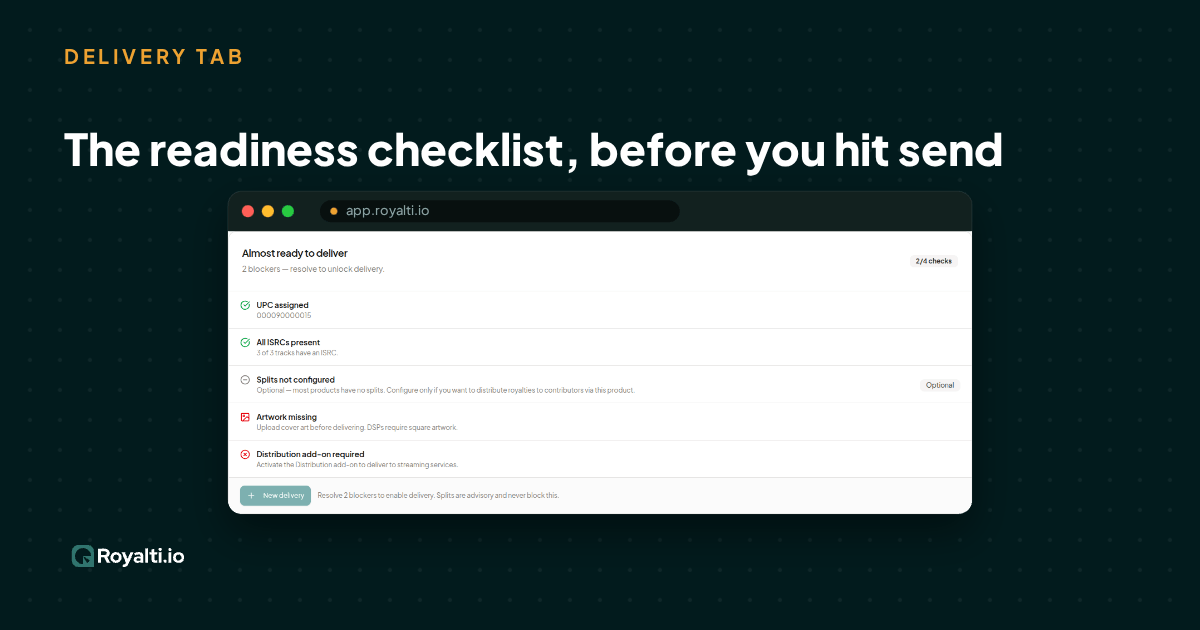
Royalti.io: How We Rebuilt DDEX Delivery
A release can fail on its way to stores without anyone noticing. Here is what broke in our DDEX delivery, how we fixed it, and what you can check first.
AI and Creator Consent 1: What Creator Groups Want From AI Music Deals
Learn why creator groups are demanding consent, fair compensation and transparency from AI music deals
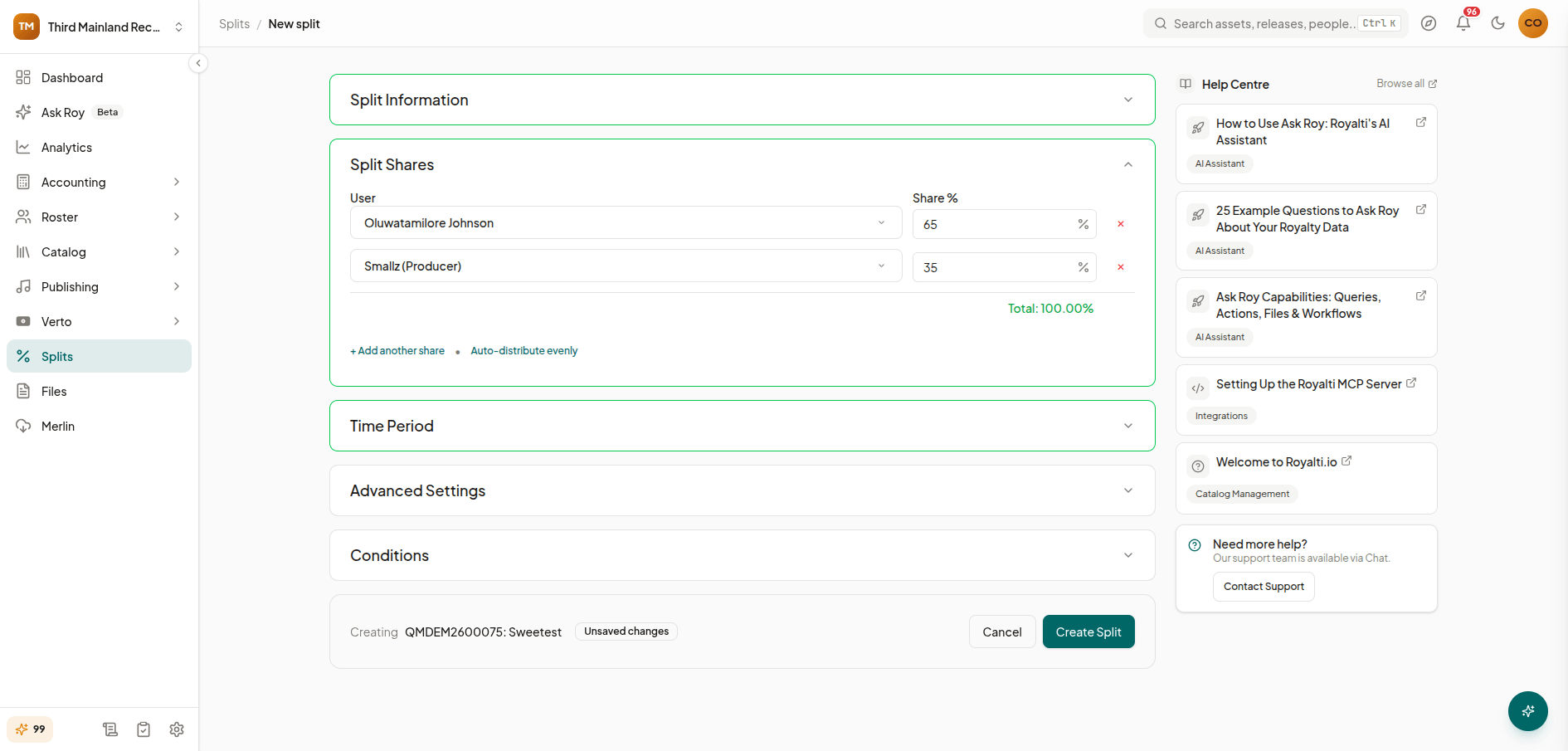
Time-Based Splits: How to Schedule Ownership Changes on Royalti.io
When a split change depends on someone remembering to make it, it gets missed. Royalti.io's time-based splits let contract terms live inside the system that pays out against them
Comments
No comments yet. Be the first to comment!