AI and Music: What Creator Groups Want From AI Music Deals
Learn why creator groups are demanding consent, fair compensation and transparency from AI music deals
The discussion about AI in creative spaces has been ongoing for a while now, and for good reason too. And in the latest development, some artists and songwriters are being told their music will be used in AI deals unless they object. Well, creator groups are saying that doesn’t sound right and should not be allowed to be the norm. So let’s break it down.
What Happened In June
On June 22, 2026, 31 organisations representing artists, songwriters and managers published a joint statement on AI music deals. The open letter with signatories that included the European Music Managers Alliance (EMMA), the European Composer and Songwriter Alliance (ECSA), the Ivors Academy and the Music Managers Forum, with groups from the US, Australia, New Zealand and Canada as well.
Their message was in opposition to the default enrollment of artists’ work for AI-related uses. They say artists on existing contracts are receiving letters from major labels and publishers saying that they will automatically be opted in for these uses, "with little actual choice offered". New signings, the group say, face AI rights clauses as a standard condition of their deals.
The letter did not name specific companies or individual deals. Instead, it described what the group say is a broader pattern across the industry, where artists and songwriters are being asked to give permission without sufficient information, clear terms, or guaranteed remuneration.
The Three Demands
The letter called on record companies, publishers, policy makers, and AI companies to consider three core principles:
Consent and Control
Artists and songwriters "must actively and specifically consent" before their works, voice, performance, or likeness are used with AI. Creators must be given a genuine opportunity to say no rather than be included by default.
Fair Compensation
They request that when creators do consent to these deals, they should receive "fair and meaningful remuneration." They also want the revenue split to be clear.
Clarity and Transparency
Artists, songwriters, and managers must be given clear information about any AI-related deal or proposal affecting their rights so they can make informed decisions. That includes stating which rights are included, what uses are allowed, how long the arrangement lasts, and how consent can be withdrawn.
What The Letter Is Not
The letter does not call for a ban on AI licensing. Rather, it calls for responsibility and transparency, arguing that whatever structures are put in place now will shape the music ecosystem for years to come.
It asks for three things on behalf of creators whose works are the subject of these deals: a real choice, clear pay, and clear terms. They say artists should be given the chance to specifically agree to their catalog being included in any AI licensing deal their label or publisher may enter into.
With an opt-out arrangement, an artist may be included unless they take action to object. Silence is automatically interpreted as a yes. One overlooked email could result in participation without the artist ever making an active decision. In an opt-in arrangement, the deal does not go through unless they specifically agree to participate.
How The Industry Responded
The reaction from the industry has been anything but linear. On one side, there is the IFPI (International Federation of the Phonographic Industry), which has defended the work done by record companies on lawsuits, legislation, and new licensing models. Stating that they are actively “leading the fight to protect artists' and songwriters' rights in the age of AI." However, it did not directly address the concern about labels licensing creators' work on their behalf.
The UMG and ElevenLabs agreement, announced September 10, 2026, claims it will only cover the artists and songwriters who choose to take part. This also seems to be the direction for other major AI music deals, as they are publicly described as involving artist participation.
Warner Music Group CEO Robert Kyncl has said artists will choose whether their name, image, likeness, or voice appears in new AI-generated songs. However, creator groups are not letting up. They argue that consent must also cover the use of music to train AI models, which that commitment does not address.
And amid all this are the lawsuits. The American Federation of Musicians (AFM) has sued Universal and Warner, alleging that the labels licensed recordings featuring its members to Suno and Udio without paying those musicians or offering any choice.
So, What Does This Mean If You Are Independent?
If you are reading this as an independent artist and wondering whether any of this concerns you, chances are, it does.
Merlin, which licenses on behalf of independent labels and distributors, and the publisher Kobalt have both signed AI licensing deals. These deals are reported as providing participating members an opt-in pathway for certain AI uses of their works in exchange for royalties.
And this is where what is written in fine print matters. A distribution, label, or publishing contract may give someone else the right to license your work on your behalf. If it does, the decision about a particular AI use may not be yours to make, unless your agreement gives you that control.
Older contracts signed before AI licensing even became a thing can be particularly tricky to interpret. This is because terms relating to "new technologies" or "all media" can be broad enough to raise questions about whether or not it extends to AI use as well.
What Can You Do?
First of all, if you can't tell what a clause allows, ask. Never assume.
Second, list every label, distributor, and publisher you work with and check each agreement for language about AI, "new technologies," or licensing on your behalf.
Third, if a partner announces an AI deal, ask what it covers, whether your work is included, what rights are involved, and how you can opt out. Ask in writing, and keep that reply.
Finally, keep your own ownership record. What you own, what rights you have granted someone else, and who can licence those rights on your behalf; you need to know these things.
Remember, Royalti keeps your splits and ownership in one place, so you can see exactly who holds what on every track.
This post is general information, not legal advice. For a specific contract, talk to a lawyer.
About the author
Keep reading
All posts →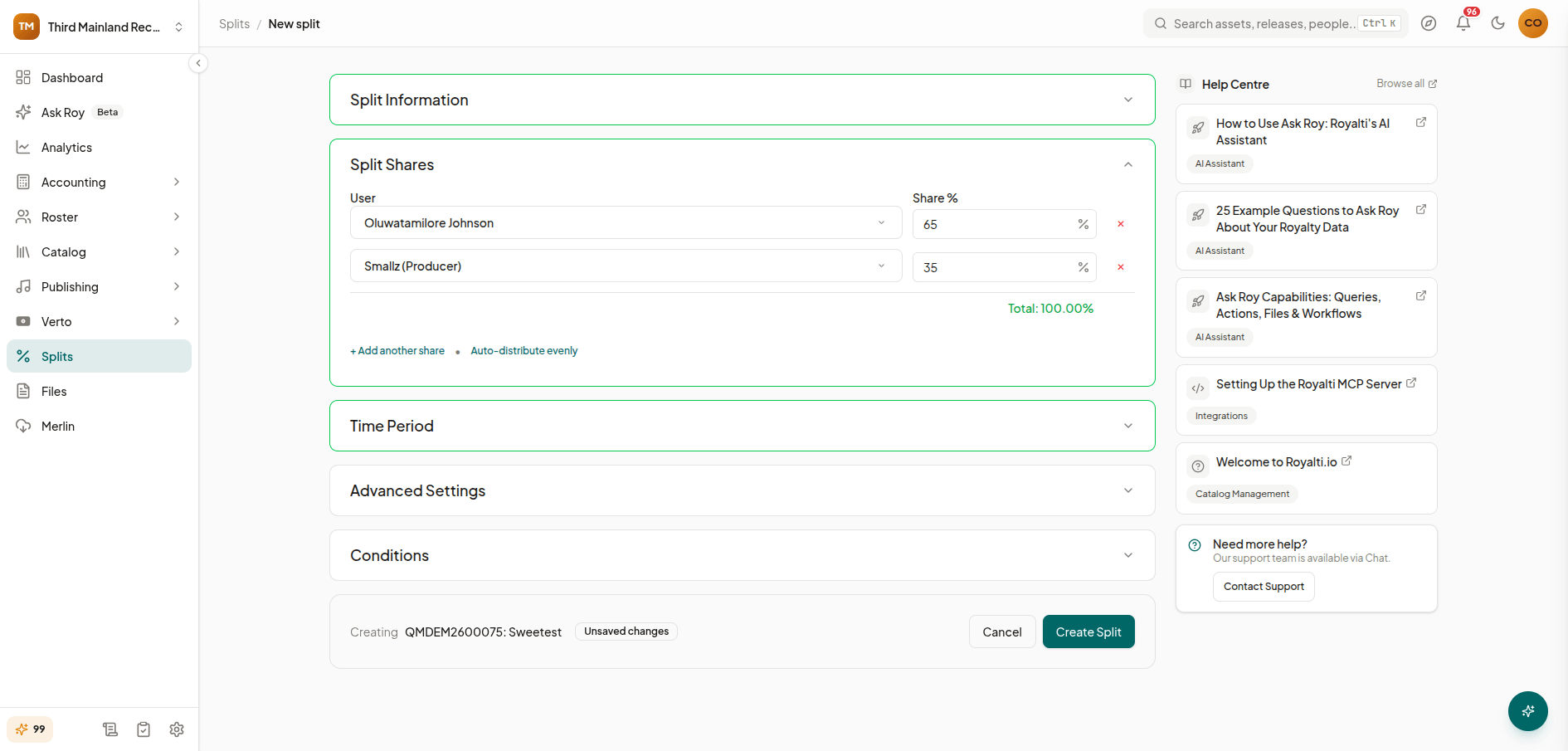
Time-Based Splits: How to Schedule Ownership Changes on Royalti.io
When a split change depends on someone remembering to make it, it gets missed. Royalti.io's time-based splits let contract terms live inside the system that pays out against them
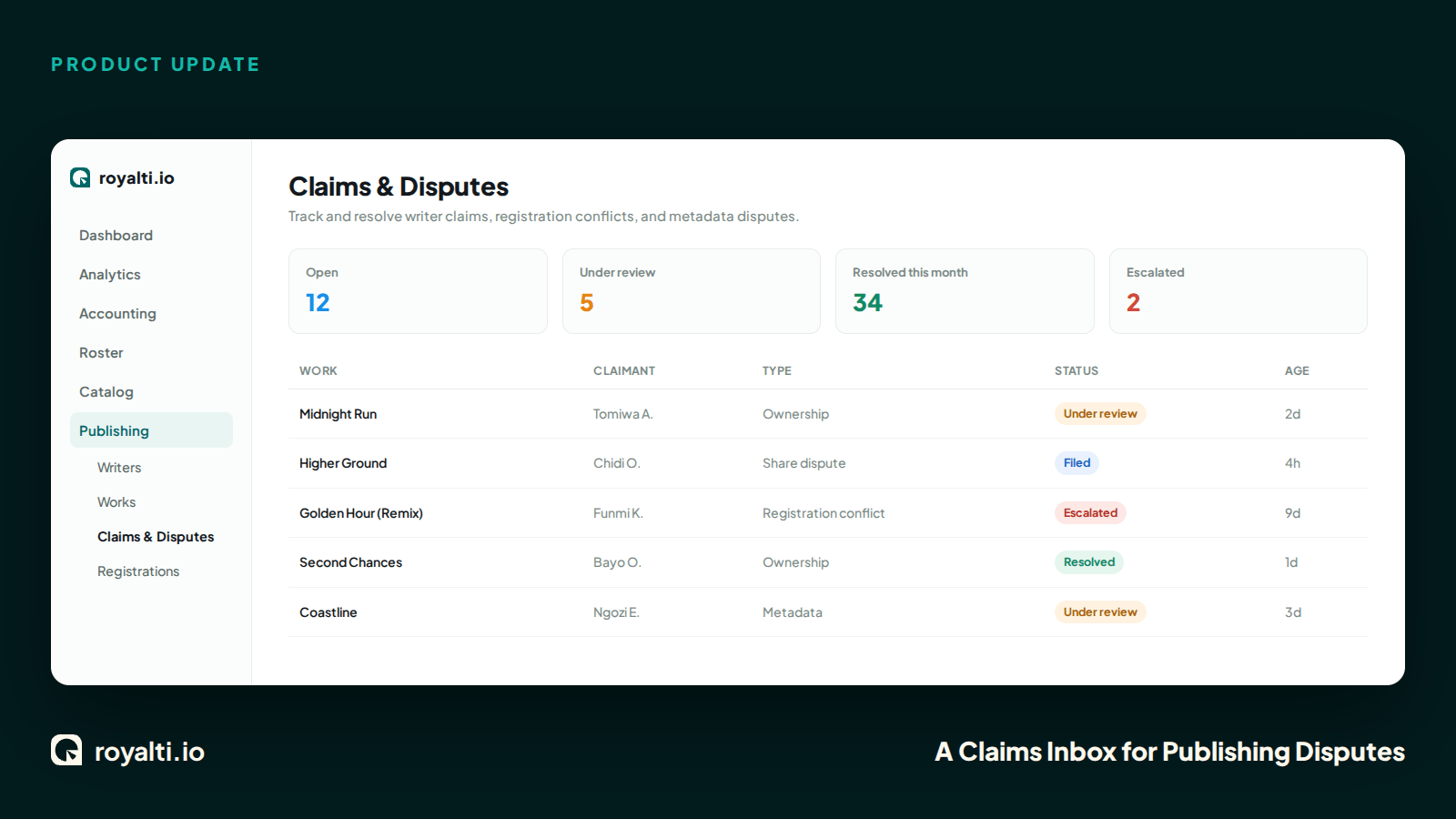
Did You Know: Royalti.io Has a Claims Inbox for Publishing Disputes
Royalti.io built a structured workflow for ownership and registration conflicts, so disputes have a start, a middle, and an end that is provable after the fact
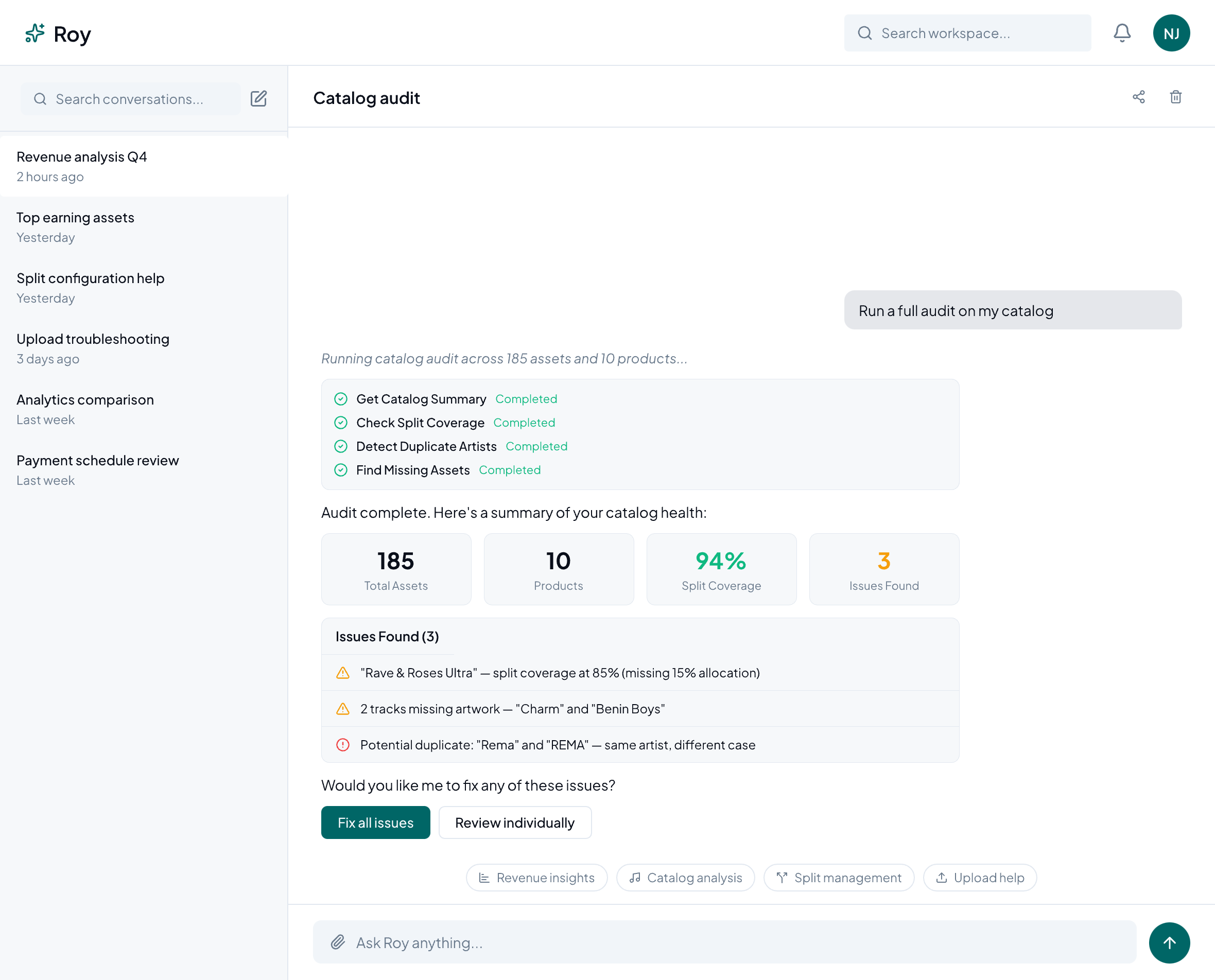
Teaching Your AI Assistant About Your Label
Roy already knows your royalty data. But what about the standing instructions your team lives by? Here is how the knowledge base fills that gap.
Comments
No comments yet. Be the first to comment!