Samples: Exploring Music Built on Someone Else’s Work
A 6-second drum solo from 1969 has been sampled over 5,000 times. Some of the biggest songs ever made were built on someone else's work. Here's what that means for royalties.
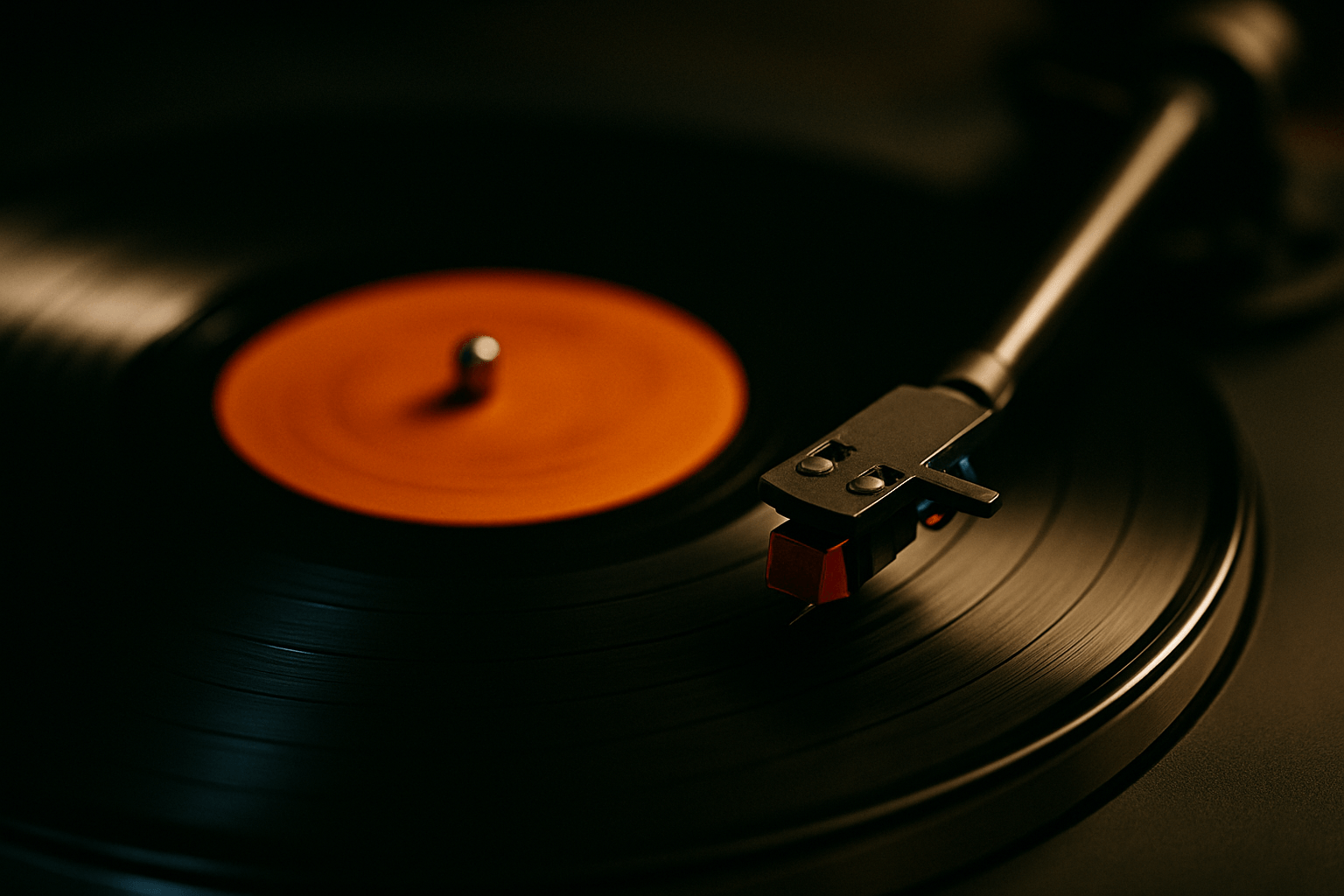
What if I told you that there is a six-second drum solo created in 1969 that has been sampled in over 5,000 songs?
A B-side track, Amen, Brother, recorded by a soul group called The Winstons, had a drum solo right at the very end, performed by G. C. Coleman. That solo is now known as the Amen Break, and it is the most sampled drum loop in the history of recorded music. But it is not alone. Sampling is one of the most contested practices in modern music because, beyond the creativity, there is also a conversation about how royalties are structured and who gets what. But before all that, let’s take a look at some songs that you may not know were samples.
Built on Someone Else’s Foundation
The Sugarhill Gang’s 1979 song Rapper’s Delight is widely considered the song that introduced hip-hop to the mainstream. But that success is often told alongside the fact that it required the threat of legal action before Nile Rodgers and Bernard Edwards, who wrote Chic’s Good Times, the track whose entire bassline the Sugarhill Gang had lifted, received any songwriting credit or compensation.
Madonna’s Hung Up, which was released in 2005, built its entire instrumental identity around the synth riff from ABBA’s Gimme! Gimme! Gimme! from 1979. Armed with a notoriously elusive sample clearance from ABBA, Madonna made a song that went to number one in 40 countries and gave the original a new generation of listeners who sought it out after hearing the sample.
Then there is Jay-Z's Young Forever, released in 2009. The song is built around the 1984 hit of the same name by the group Alphaville. The song keeps the core synth melody and structure of the original, with British singer Mr. Hudson re-singing the chorus, while Jay-Z layers in rap verses.
A Direct Sample or an Interpolation
There is a difference between lifting the actual audio recording from the original track and re-recording the melody or lyrics from scratch. The first is called direct sampling, while the other is called Interpolation. This distinction is important because music has two distinct copyrights, one in the composition and the other in the master recording. The difference determines which copyright you need to clear and from whom.
For example, in Jay-Z's Young Forever, because he had an artist (Mr Hudson) re-sing the Alphaville melody rather than lifting the original recording, clearance was needed only for the composition. Compare that with Phyno’s Grateful, which places the actual, physical audio recording from the 2004 Igbo gospel song Kporo ya isi na ala directly into the track. So both the Composition and master recording must be cleared.
Three Words: Permission, Credit, and Compensation.
Everyone knows that the Kuti estate is very protective of Fela’s legacy. So when J. Cole heavily sampled the saxophone riff and jazz hook from the 1973 track Gentleman, one can assume it was done with due permission. With more than a decade down the line and no legal dispute in sight, that is a safe assumption to have.
For Tems’ Love Me Jeje, she flipped the 1997 Love Me Jeje by Seyi Sodimu. Sodimu has publicly confirmed that he was supportive throughout the process, and when the song won a Grammy, he praised her publicly for bringing his 27-year-old classic back to life.
When it emerged what it cost Burna Boy to sample Toni Braxton's He Wasn't Man Enough for Last Last, a lot of people thought it was an exaggeration. But according to widely reported accounts, the publishing split on the sample agreement gave Braxton 60%, Atlantic Records 30%, and left Burna Boy with 10% on his own song.
What these three instances show: to proactively avoid costly disputes, the general rule for sampling is to ask permission, give credit, and offer compensation. And if your song is being sampled, what you get will depend heavily on which copyrights are being cleared.
The Unspoken Rule
Now back to the Amen Break. When the Winstons recorded Amen, Brother in 1969, the track did not come close to the success of the songs that would eventually take from it. In fact, G.C. Coleman, the drummer, died in obscurity. For decades, neither The Winstons nor Coleman’s estate received any compensation for one of the most used recordings in music history. Eventually, it became one of the most cited arguments for why sampling rights matter.
For all its creativity, sampling constantly threads the line between homage and taking, between influence and exploitation. Under Nigerian copyright law, using a recognisable portion of a sound recording without clearance is infringement. A correctly executed sample should not only build on what came before, but open the door for the past to shine through. An act of preservation as much as creation.
The unspoken rule is simply: always consider the original creator. Never extract value without permission, or gain recognition without attribution, or benefit without compensation.
About the author
Keep reading
All posts →We Can All learn a Thing or Two From Dolly Parton About Ownership
Dolly Parton turned down Elvis and kept her publishing; here's what every artist should learn from that.
Selling a Culture: How K-Pop Became a Business Model And What Nigeria Can Learn From It
A Korean folk song sung in a 50,000-seat stadium, 5,000 miles from home. How K-pop engineered that moment, and what Afrobeats can learn from it.

The Geography of Sound: Why Music Sounds Different in Every City
We explore how place shapes music, why every city has its own sound, and why that matters for every artist
Comments
No comments yet. Be the first to comment!