Navigating Streaming Fraud and Protecting Your Music Catalogs
insights on how to effectively navigate the digital streaming landscape, avoid being victim to streaming fraud and protect your music catalog,
With
digital music distribution
comes the ever-present risk of income diversion, not because the system is in itself flawed but because there will always be opportunists whose stock-in-trade is finding and exploiting any gaps for their personal gains. We’ve previously explored the complexities of digital music distribution and how streaming fraud may have necessitated a policy overhaul for one of the
world’s biggest streaming platforms
. Now, we will break down how streaming fraud affects music professionals across the board and share the best strategies to navigate this challenge and ultimately protect catalogs from exploitation.
Before we begin, it’s important to acknowledge that there is no blueprint for protecting your life’s work against fraudsters. However, by implementing practical, proactive strategies, you can minimize risks and protect your streams, but you must continuously refine your approach.
Understanding Streaming Fraud
Streaming manipulation takes many forms, from fraudsters who use automated bots to repeatedly play songs, artificially inflating stream counts, to click farms where networks of devices generate fake streams, mimicking real listener engagement.
There’s also impersonation, identity theft, account hacking, and playlist manipulation. In essence, streaming fraud refers to any activity where deceptive tactics are used to boost numbers, royalties, or playlist placements.
To combat this, most streaming platforms employ detection systems to monitor fraudulent activities. These include flagging accounts that stream music nonstop for 24 hours, identifying suspicious playlists with abnormally high engagement rates, and tracking unexplained spikes in follower counts.
However, fraudsters continuously adapt, making the fight against streaming fraud a constant tug-and-pull situation. The rise of
AI-generated content
has further complicated matters, introducing new concerns that demand urgent attention. In response, streaming platforms tightened their anti-fraud measures, implementing stricter verification processes and advanced monitoring systems to protect legitimate artists and ensure fair revenue distribution.
How to Protect Your Music Catalog
As streaming platforms
utilize fraud detection tools
to analyze listening patterns and flag suspicious activity. It has become imperative for artists and labels to also take proactive steps to safeguard their catalogs.
One crucial step is to
regularly monitor streaming data
for anomalies. A sudden increase in engagement, especially without any marketing or promotional efforts, should raise red flags. Consider keeping a detailed record of all promotional activities to help you distinguish legitimate from fraudulent streams.
Royalty management platforms like
Royalti.io
provide real-time data analytics, making it easier to track unusual activity and document potential fraud.
Additionally,
avoid services that promise guaranteed streaming numbers
, as these often involve fraudulent tactics; instead, focus on
organic audience growth
by engaging with legitimate promotion services and maintaining ethical marketing practices.
Also,
routinely audit your playback data
and report any suspicious trends to your distributor or streaming platform. Staying vigilant and acting swiftly can help prevent long-term damage to your catalog.
Conclusion
With digital streaming comes significant opportunities for artists to increase their earnings, but it also poses new risks, streaming fraud being one of the most pressing. While fraudsters are constantly refining their tactics, music professionals must remain proactive in protecting their primary source of income.
By understanding common fraud patterns, implementing preventive strategies, monitoring streaming analytics, swiftly reporting suspicious activity, and maintaining thorough promotional records, artists can significantly reduce their exposure to fraud.
About the author
Keep reading
All posts →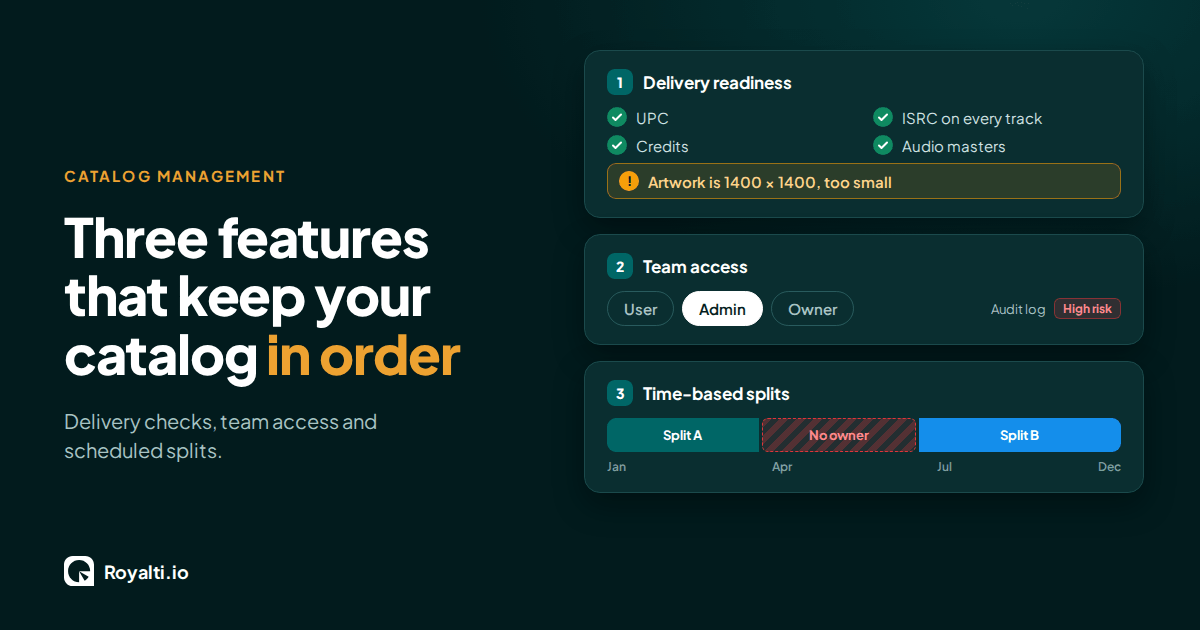
Royalti.io: Three Features That Keep Your Catalog in Order
Delivery checks that stop bad releases, team access you can trust, and splits that change on schedule. Here is how each one works in Royalti.io
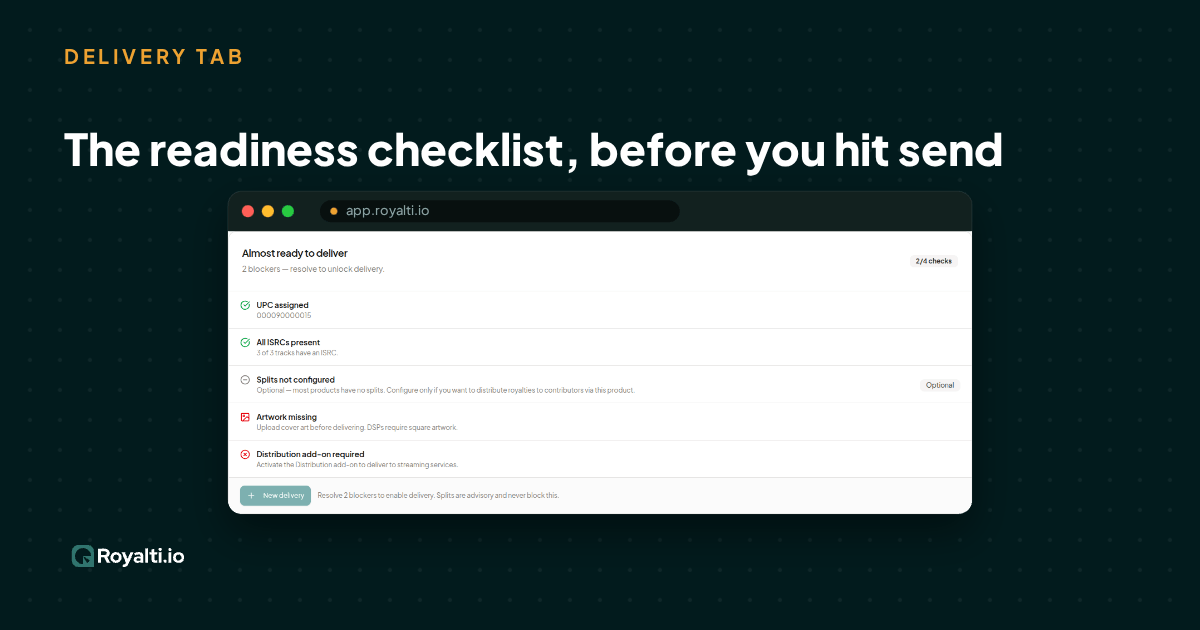
Royalti.io: How We Rebuilt DDEX Delivery
A release can fail on its way to stores without anyone noticing. Here is what broke in our DDEX delivery, how we fixed it, and what you can check first.
AI and Creator Consent 1: What Creator Groups Want From AI Music Deals
Learn why creator groups are demanding consent, fair compensation and transparency from AI music deals
Comments
No comments yet. Be the first to comment!