Explaining Split Sheets
A split sheet is one of the documents that represents the fine details of a collaboration. Particularly as it concerns who contributed...
Split sheets: what are they?
Collaborating on music is a beautiful thing. Producers, artists, and/or songwriters come together to create magic. The successful creation of a collaborative work requires conversations among contributors. What is each person's expected contribution to the work? What credits would be given for what measure of contribution? How would the generated royalty from this work be distributed among each contributor?
As with every business agreement, terms are negotiated and roles are determined. Expected benefits are also specified. A split sheet is one of the documents that represent the fine details in a collaboration, particularly as it concerns who contributed what and who receives what payment.
Remember, last week we talked about the duties of a royalty manager. A royalty manager interprets the contents of documents such as split sheets. He would determine the royalty share each contributor receives based on pre-agreed splits.
Split sheets are necessary for any collaboration. They set the foundation of the agreement and protect the contributors’ interests. They are a good place to start to avoid legal disputes or “stories that touch,” which usually come up after a piece of work becomes successful.
What does a split sheet look like
A typical split sheet document would specify:
- The name of the composition or recording.
- The details of each contributor’s personal information (names, contact information, and publishing information).
- Their role or contribution to the particular body of work.
- The ownership percentage of each contributor. Expected proceeds from the work will be shared based on these splits.
If you have read this piece to this point, congratulations. You now know what split sheets are and why they are so important. However, ensure that the document is signed by all contributors, though, “E get why”.
Finally, Royalti.io offers a simple and transparent system for recording split sheet contracts and automatically calculating royalty shares for each contributor added to a musical work. Whether you are a record label, distributor, or artist, the platform allows you to
- Combine royalty data files from different DSPs and distros into a simple dashboard.
- Manage royalty shares and payments based on pre-agreed splits.
- Grant contributors full or managed access to view their accrued royalties calculated from the Splits formulae.
Sign up for FREE, or reach out to learn more about how we can help you. You can also check out the demo to get a feel of the platform
About the author
Keep reading
All posts →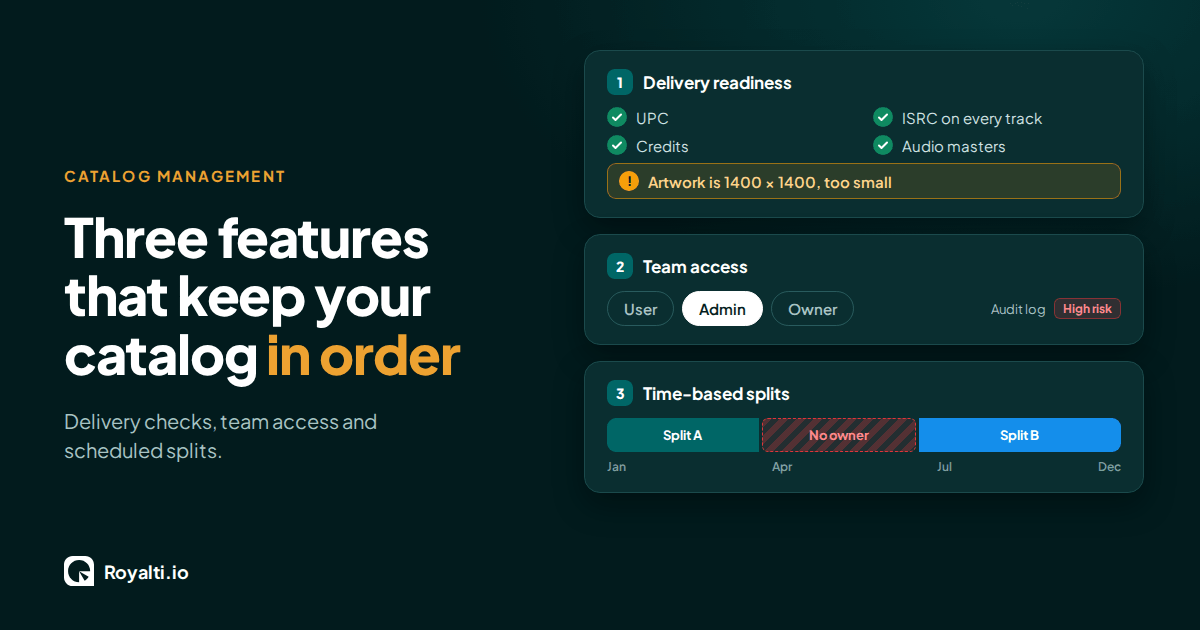
Royalti.io: Three Features That Keep Your Catalog in Order
Delivery checks that stop bad releases, team access you can trust, and splits that change on schedule. Here is how each one works in Royalti.io
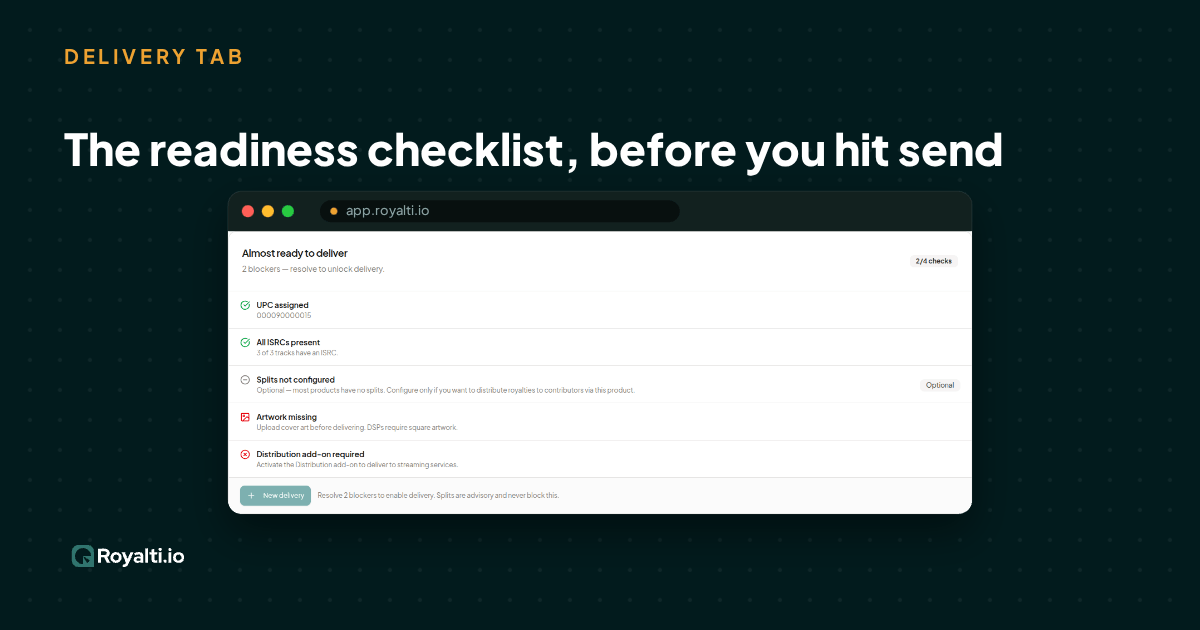
Royalti.io: How We Rebuilt DDEX Delivery
A release can fail on its way to stores without anyone noticing. Here is what broke in our DDEX delivery, how we fixed it, and what you can check first.
AI and Creator Consent 1: What Creator Groups Want From AI Music Deals
Learn why creator groups are demanding consent, fair compensation and transparency from AI music deals
Comments
No comments yet. Be the first to comment!