Artist Managers: Who They Are and What They Do?
The simplest way to define artist managers (single person or a company) is that they are talent gatekeepers. The job is to establish...
Whether it is unlimited access to celebrities with backstage passes at concerts, planning tours, or strategizing album releases. The job of an artist manager hardly sounds like hard work, but it is. If you have ever wondered what that job description looks like, we did some research for you.
Who is an Artist Manager?
The simplest way to define an artist manager is that they are talent gatekeepers. Managers are the artists' representatives. It could be a single person or a company that offers management services. Whatever the case, the job is to establish, promote, and protect the artist's career. Behind every successful artist is a hard-working and often sleep-deprived manager(s). They ensure that the artist’s work gets noticed and their image continues to appeal to the public.
What does an Artist Manager do?
- Identify talent: Some manager/artist relationships start with a manager recognizing talent and offering to guide and nurture said talent. A manager ensures that opportunities that encourage the artist’s career growth are always accessible.
- Make great decisions: The manager pools in the right people, collaborations, and deals. He emphasizes building networks to promote the brand that is the artist. Depending on the specific manager/artist relationship, the manager may be responsible for deciding which offers are worth exploring or which aren’t.
- Brand marketing: The tool of an artist is talent. However, a manager understands that the artist’s image and brand are also important. His role should include maintaining the artist’s appeal to their target audience. A manager understands the need for an artist to remain relevant.
- Protect artist's interest: Be it the process of negotiating contracts, fixing dates for performances, or approving a media appearance. In every room, a manager is the voice of the artists and will always place their interests first. The role is to protect the talent and nurture, and promote it.
- Network: In music, the importance of building the right network is understated. The success of an artist depends on a lot of variables. The most important is the composition of the artist’s team and partnerships. Sometimes, choosing the right collaborations is more important than the music. And it is often the manager's responsibility to evaluate these relationships.
- Take care of the little things: Depending on the manager/artist relationship, the stage of the artist’s career, and the size of the artist’s team, the manager could take up more responsibilities if necessary. It could be managing cash flow, making it to appearances on time, or ensuring the general well-being of the artist. The manager might be the interim accountant, chauffeur, or personal assistant.
Pheew! That looks like a lot, so bigger artists usually have multiple duty-specific managers, e.g, Road/Tour manager, Business manager, Legal manager, etc.
This is a reminder that royati.io is an all-in-one catalog management and accounting platform for music businesses. You can easily grant access to royalty data to your music team. Artists, managers, and contributors can view analyzed revenue data in real-time. So give it a try, visit our website to learn more, and sign up for free.
About the author
Keep reading
All posts →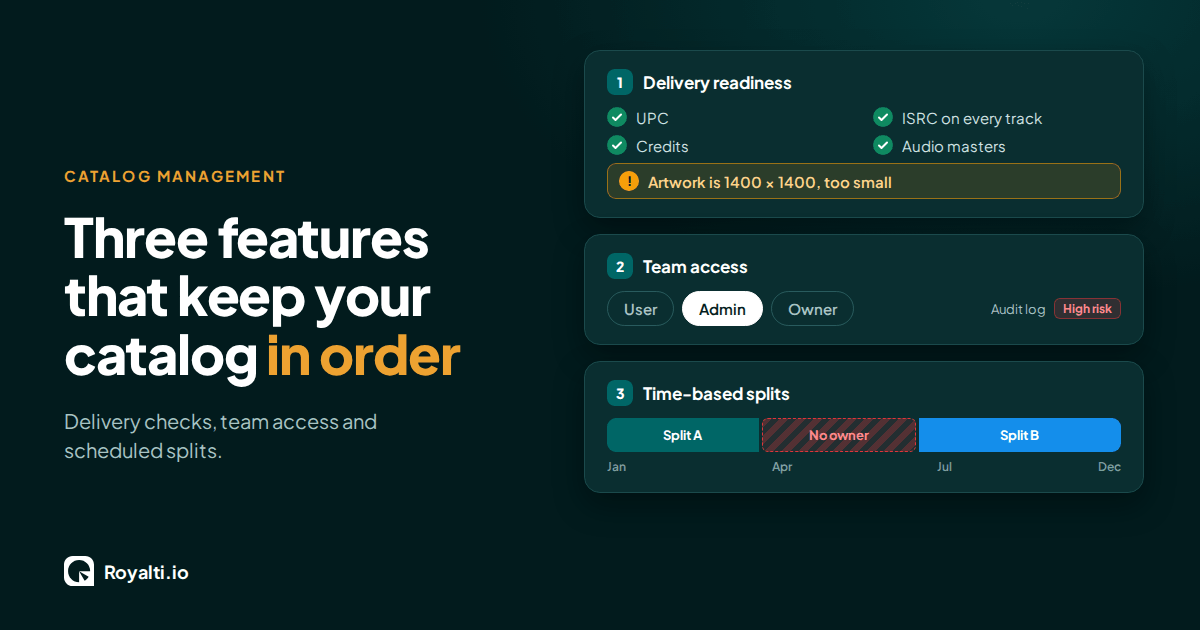
Royalti.io: Three Features That Keep Your Catalog in Order
Delivery checks that stop bad releases, team access you can trust, and splits that change on schedule. Here is how each one works in Royalti.io
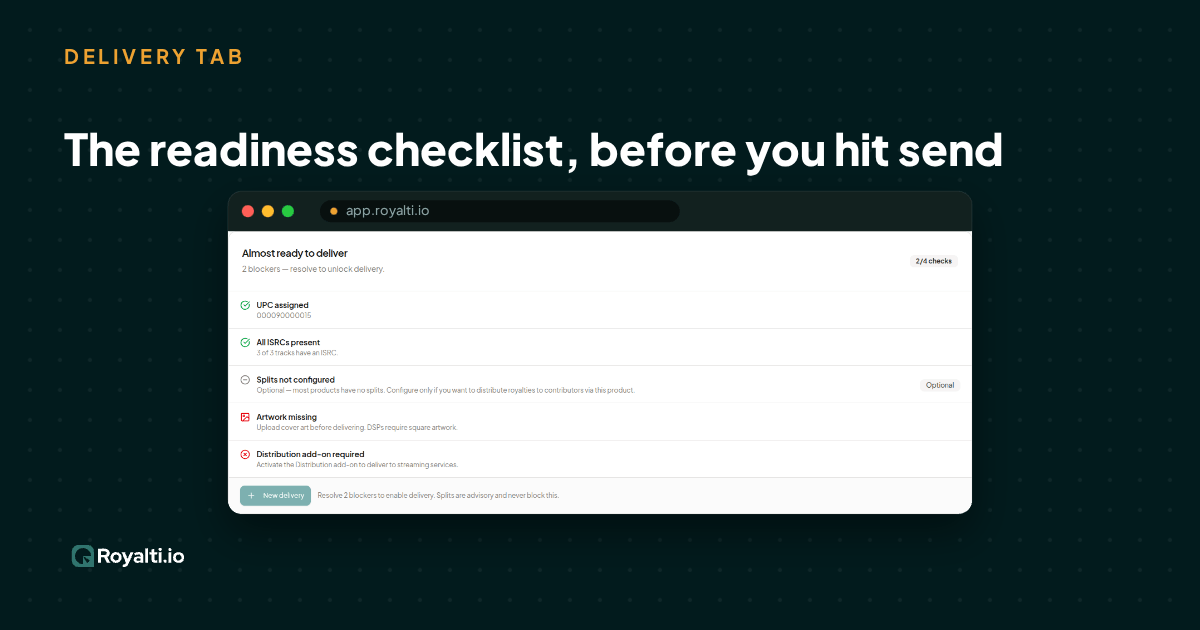
Royalti.io: How We Rebuilt DDEX Delivery
A release can fail on its way to stores without anyone noticing. Here is what broke in our DDEX delivery, how we fixed it, and what you can check first.
AI and Creator Consent 1: What Creator Groups Want From AI Music Deals
Learn why creator groups are demanding consent, fair compensation and transparency from AI music deals
Comments
No comments yet. Be the first to comment!